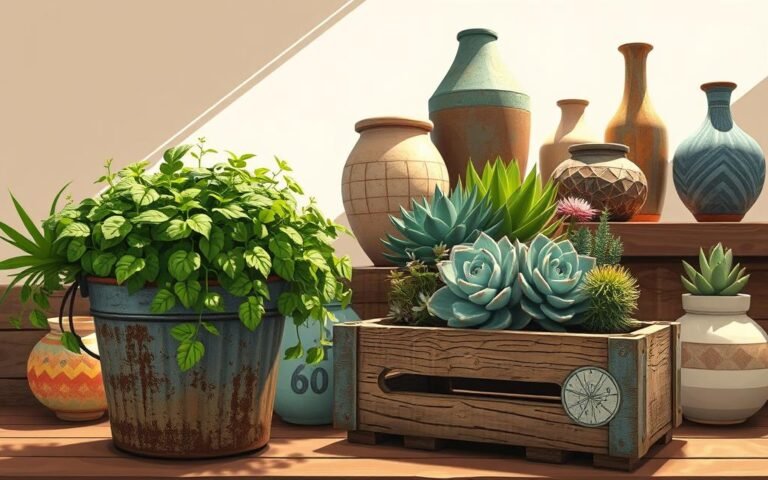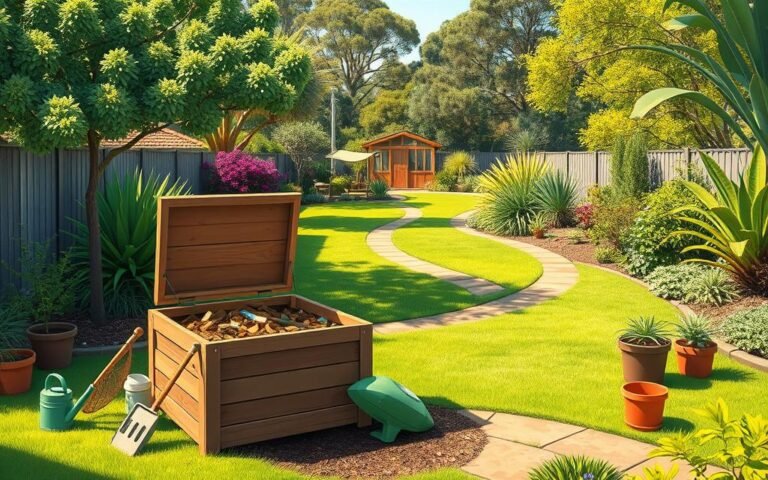
You can make your garden special by using DIY planters from things you might throw away. Turning everyday items into eco-friendly gardening solutions is good for the planet. It also makes your space look unique.
Think about making old tin cans, teacups, or boots into lovely repurposed containers for your plants. This way of gardening is cheap and good for the environment. Upcycling helps make our future greener.
Key Takeaways
- Transform everyday items into unique DIY planters.
- Reduce waste and promote eco-friendly gardening practices.
- Add a personal touch to your garden with creative repurposed containers.
- Contribute to a more sustainable future through upcycling.
- Explore various materials for upcycling, such as tin cans and old boots.
The Art and Benefits of Plant Pot Upcycling
Upcycling turns old items into new, stylish plant pots. It’s good for the planet and your wallet. Plus, it makes your home look unique.
Environmental Impact of Repurposing Household Items
Upcycling plant pots cuts down on landfill waste. It’s a green way to garden. You’re helping the planet with every pot you make.
Budget-Friendly Gardening for Aussie Homes
Gardening can be cheap. Use things you already have to make planters. It’s a smart way to garden without spending a lot.
| Item | Original Use | Planter Idea |
|---|---|---|
| Tin Cans | Food Storage | Succulent Planters |
| Old Boots | Footwear | Quirky Planters for Small Plants |
| Wooden Crates | Storage | Large Planters or Vertical Gardens |
Adding Personal Style to Your Indoor Jungle
Upcycling lets you show off your style in your garden. Use unique items to make your space special. Your planters can start conversations.
Upcycling is good for the planet and makes your home special. So, start making your own eco-friendly plant pots today!
Essential Tools and Materials for Your Upcycling Projects
Before you start making planters from old items, get these tools. Upcycling is about being creative and using the right tools safely and well.
Basic Tools Every Australian DIYer Needs
You’ll need some basic tools to start upcycling. A good glue gun, wire cutters, a hammer, and a drill are must-haves. A sturdy pair of scissors and a craft knife are key for cutting and shaping.
Having these tools ready will make your project smoother and more fun.
Safety Equipment and Precautions
Always put safety first when upcycling. Wear protective gloves to avoid cuts and safety goggles to keep your eyes safe from flying debris. It’s also important to work in a place with good air flow, especially when using paints or adhesives.
Weather-Resistant Materials for Australian Conditions
Australia’s weather can be tough, so use materials that can handle it. Use waterproof sealants and
With the right tools and materials, you can make beautiful, lasting planters for Australian weather.
Kitchen Items Transformed into Stylish Upcycled Home Plant Pots
Turning kitchen items into plant pots is creative and eco-friendly. It gives old items a new life. This makes your home look unique and personal.
Tin Cans and Coffee Containers
Tin cans and coffee containers are great for upcycling. They’re easy to find, strong, and can be made into cool planters.
Creating Proper Drainage Systems
To make tin cans into planters, you need a drainage system. Drill holes in the bottom to stop the soil from getting too wet. This keeps your plants healthy.
Australian-Inspired Decorating Ideas
Decorate your tin can planters with an Aussie theme. Use paint or decoupage to add designs that look like the Australian outdoors.
| Material | Decoration Idea | Plant Suggestion |
|---|---|---|
| Tin Can | Aboriginal art patterns | Succulents |
| Coffee Container | Eucalyptus leaf designs | Herbs |
Teacups and Mugs as Charming Succulent Holders
Teacups and mugs are perfect for succulents. They’re small and add a vintage charm to your space.
Glass Jars and Bottles for Water Propagation
Glass jars and bottles are great for growing plants in water. You can grow herbs and cuttings. The glass lets you see how they’re doing.
Upcycling kitchen items into plant pots is good for the planet. It also makes your home unique and personal.
Unexpected Household Objects for Creative Planters
Your home is full of things you can turn into planters. Think outside the box to make everyday items into planters. They can make your garden or indoor space more interesting.
Repurposing Old Books and Magazines
Old books and magazines can be turned into planters for small plants or succulents. Just remove the pages, add soil, and plant your greenery. It’s a creative way to reuse old books and add a literary feel to your decor.
Wooden Crates and Pallets for Larger Plants
Wooden crates and pallets are great for bigger plants or a rustic garden look. You can break down pallets for single planters or keep them together for a vertical garden. Wooden crates can be used as is or changed to fit your needs.
Plastic Containers: From Rubbish to Resource
Old plastic buckets or tubs can become useful planters. Clean and decorate them to match your garden’s look. “Reducing, Reusing, and Recycling” is more than a saying; it’s a way to garden.
Upcycled Footwear: Boots and Shoes as Quirky Planters
Old boots and shoes can make your garden quirky and fun. Fill them with soil, plant your flowers or herbs, and show them off. As a gardening expert says,
“Using old footwear as planters adds a unique touch to your garden.”
These creative ideas can breathe new life into old items and create a special garden. So, think twice before throwing something away. It might become your next planter.
Step-by-Step Tutorials for Australian Plant Enthusiasts
Let’s explore some great DIY tutorials. They’ll help you make beautiful planters from everyday items. These are perfect for the Australian climate. 🌿
Upcycling is more than being creative. It’s also about giving new life to items that would otherwise go to waste. As an Australian plant lover, you can make a difference and beautify your home.
Drought-Resistant Planters from Recycled Containers
Creating drought-resistant planters saves water and helps your plants thrive in dry conditions. Choose containers that are waterproof and have good drainage. Use a mix of potting soil and perlite or sand to improve drainage. Here’s a simple guide:
- Clean and dry your recycled containers well.
- Drill drainage holes if they don’t exist.
- Fill the container with your drought-resistant soil mix.
- Plant your chosen succulents or drought-resistant plants.
Hanging Kokedama Using Old T-shirts and Twine
Kokedama is a Japanese art form that wraps plants in moss and twine. It’s a beautiful way to display plants. Using old t-shirts and twine makes it eco-friendly. To make your own, you’ll need:
- A piece of old t-shirt material.
- Twine or string.
- Moss and potting soil.
- A plant of your choice.
Wrap the plant in moss, then cover it with the t-shirt material. Secure it with twine. Hang your kokedama in a bright, indirect light spot. Enjoy the unique display.
Creating Concrete Planters with Household Moulds
Concrete planters are durable and modern. You can make your own using household moulds and simple materials. Mix cement, sand, and water to create your concrete. Pour it into your mould. Let it set, then remove it from the mould and sand any rough edges.
As one expert says, “Concrete planters are not only functional but also add an industrial chic to any garden or indoor space.”
“The versatility of concrete allows for endless design possibilities, from minimalist to ornate.”
Vertical Garden Solutions for Small Australian Balconies
If you have a small balcony, you can still have a lush garden. Use a trellis or a wall-mounted planter to maximize your space. Choose plants that thrive in vertical conditions, such as ivy or ferns. Make sure they get enough light and water.
By using these DIY tutorials, you can turn your Australian home into a green oasis. Happy gardening! 🌱
Conclusion: Growing a Greener Future with Upcycled Planters
Using upcycled planters helps reduce waste and makes your home look unique. It’s a way to support sustainable home decor and eco-friendly gardening. India throws away 62 million tonnes of waste each year, mostly untreated.
Upcycling turns this waste into useful items. It’s a big help in solving this problem.
When you make upcycled planters, you’re helping the planet. You’re joining a group that cares about the environment. With 73% of people wanting to help the planet, your actions count.
So, keep making upcycled planters and encourage others to do the same. We can make the world greener, one planter at a time.