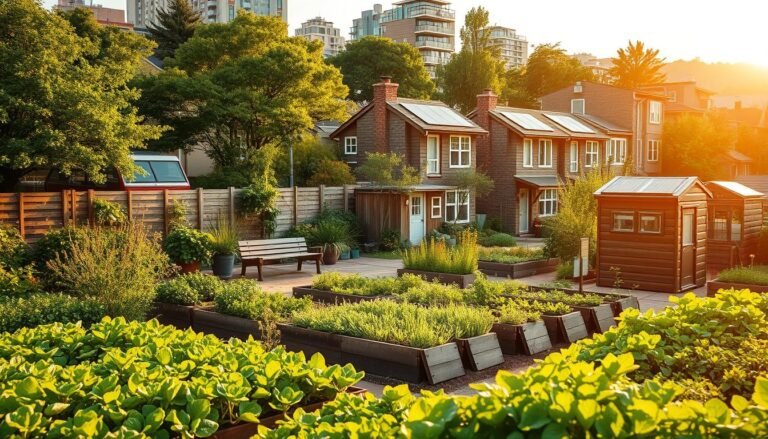
Starting a journey towards a greener lifestyle is exciting. Creating a outdoor space is a great first step. It’s good for the planet and gives you a peaceful place to relax and grow your own food.
In Australia, gardening is a big part of life. Making your garden sustainable is easy. A few simple changes can help the environment and make your garden beautiful and useful.
Key Takeaways
- Discover simple ways to make your garden more eco-friendly
- Learn how to reduce your environmental footprint through sustainable gardening practices
- Explore the benefits of growing your own food in an Australian climate
- Find out how to create a peaceful retreat in your outdoor space
- Get tips on adopting sustainable gardening practices that suit your lifestyle
The Benefits of Sustainable Gardening in Australia
Sustainable gardening in Australia is great for the environment, economy, and your health. It helps make the planet healthier and improves your life.
Environmental Impact of Home Gardens
Home gardens are key in keeping biodiversity alive and cutting down carbon emissions. Using native plants attracts birds and bees, which pollinate. This makes your garden beautiful and full of life.
Economic Advantages for Australian Households
Sustainable gardening saves money for homes. It cuts down water bills by using rainwater systems. Growing your own food also saves on grocery costs.
Health and Wellbeing Benefits
Gardening sustainably is good for your health too. It gets you outside and active, boosting your mood and reducing stress. Plus, you get to eat fresh, organic food from your garden.
Water-Wise Gardening Techniques for Australian Climates
Australia has different climates, making water-wise gardening key for sustainable living. These methods help cut down water use while keeping your garden looking great.
Rainwater Harvesting Systems
Rainwater harvesting systems are a great way to save water. They collect rainwater for later use, cutting down on mains water. You can use this water for plants, cleaning outdoor spaces, and even toilets.
Greywater Recycling for Gardens
Greywater recycling is another way to use less water. It uses water from sinks, showers, and washing machines for your garden. Just make sure to follow local rules and guidelines.
Drought-Resistant Landscaping
Choosing drought-resistant plants is wise for saving water. These plants need little water, ideal for Australia’s dry weather. Think about using native plants, succulents, or other water-saving species.
Mulching Strategies
Mulching helps keep soil moist, stops weeds, and controls soil temperature. Use organic mulches like wood chips or straw. A thick layer around your plants is best.
Watering Schedules for Different Australian Regions
It’s important to adjust your watering schedule based on your area’s climate. For example, tropical North Queensland might need more water than South Australia. Always check the weather forecast and adjust your watering.
Native Australian Plants for Sustainable Home Gardens
For a truly sustainable home garden, think about using native Australian plants. These plants fit well with our local climate and soil. They’re perfect for gardeners wanting to help the environment.
Benefits of Growing Indigenous Species
Using indigenous species in your garden has many advantages. They need less water, fewer fertilizers, and are easier to care for. Plus, they attract birds, bees, and butterflies, boosting your garden’s biodiversity.
Top Native Plants for Different Australian Climates
Australia’s varied climates mean different native plants do well in different places. Here are some top picks for different areas:
Coastal Gardens
- Coastal wattle (Acacia sophorae)
- Sea box (Alyxia buxifolia)
Arid and Semi-Arid Regions
- Desert oak (Allocasuarina decaisneana)
- Sturt’s desert pea (Swainsona formosa)
Tropical North
- Queensland bottle tree (Brachychiton rupestris)
- Normanbya palm (Normanbya normanbyi)
Creating Wildlife-Friendly Habitats with Native Plants
Adding native plants to your garden makes it a wildlife-friendly habitat. It makes your garden look beautiful and helps protect Australia’s unique wildlife.
Organic Gardening Practices for Healthier Ecosystems
Organic gardening makes your home garden healthier. It cuts down on chemical use. This leads to a more balanced and green space.
Natural Pest Management Solutions for Australian Gardens
Keeping pests away is key to a healthy garden. Introduce good bugs like ladybugs and lacewings. They fight off pests.
Neem oil and garlic sprays also work well. They keep pests away without harming your garden.
Homemade Compost and Fertilisers
Homemade compost makes your soil better. It’s made from kitchen scraps and garden waste. This makes plants grow strong.
Using homemade fertilisers like compost tea adds important nutrients. Your plants will thank you.
Companion Planting Strategies for Australian Conditions
Companion planting means growing plants together for better health. Marigolds with tomatoes keep nematodes away. It’s good for your garden and the environment.
Try organic gardening to make your garden better. Start with one or two ideas. See how it improves your garden’s health and variety.
Sustainable Home Garden Ideas for Limited Spaces
You don’t need a big backyard to have a garden. Small spaces can also be green and lush. A little creativity and the right methods can turn any spot into a green oasis.
Vertical Gardens for Urban Australian Homes
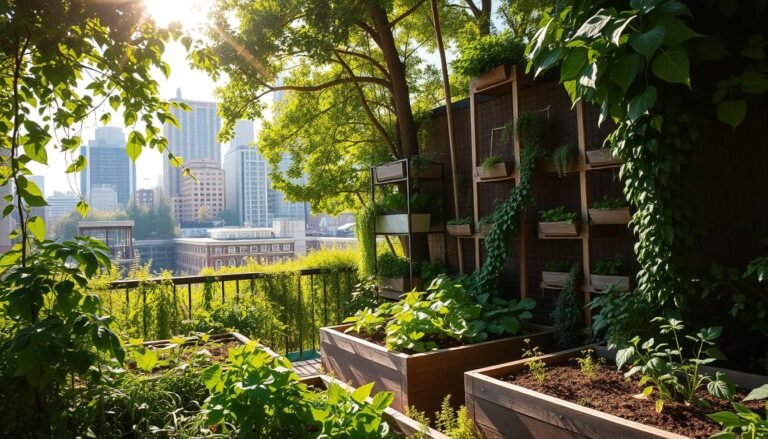
Vertical gardens are great for small urban homes. They use walls or trellises to grow plants like herbs and climbers. You can make them with recycled materials like old pallets or crates.
Balcony and Rooftop Garden Solutions
Balconies and rooftops are perfect for gardening in tight spots. Make sure your plants fit the local weather and are safe from wind and sun. For more tips, check out our guide on sustainable gardening for small spaces.
Container Gardening with Recycled Materials
Container gardening is a smart choice for small areas. Use recycled materials like old containers or wooden crates. It’s creative, reduces waste, and makes your garden unique.
These sustainable garden ideas let you enjoy gardening in tight spots. Whether it’s a vertical garden, a balcony garden, or a container garden, every small area can become a green paradise.
Edible Gardens: Growing Your Own Food Sustainably
Imagine stepping into your backyard and picking fresh food for dinner. Welcome to the world of edible gardens. Growing your own food is healthy and helps the planet.
Planning a Year-Round Australian Vegetable Garden
To have food all year, plan your garden by the seasons. Choose vegetables that grow well in different weather. Use succession planting to plant and harvest at the right times.
Fruit Trees and Berries Suited to Australian Conditions
Fruit trees and berries are great for your garden. Australia’s weather is good for many fruit plants. Pick ones that fight off diseases and fit your area’s weather.
Herb Spirals and Kitchen Gardens
Herb spirals and kitchen gardens are perfect for small spaces. They use space well and are easy to reach. This makes caring for your garden simpler.
Connecting with Local Seed Saving and Swapping Communities
Joining local seed saving groups is rewarding. These groups share seeds, tips, and knowledge. It helps grow a diverse and strong garden. It also saves heritage seeds and boosts nature.
Conclusion: Creating Your Sustainable Garden Paradise
Now you know how to make a sustainable garden. Use water wisely, pick native plants, and go organic. This way, your garden will grow strong and help the planet.
When planning your garden, think about your space. Look at the weather and soil. Pick plants that fit your area well. Try new things like using rainwater and greywater.
These green gardening steps will cut down on harm to the earth. They also make a safe home for animals and a calm spot for you. Start now and see the good things a green garden can do.