Start small and smart. Garden centres still sell many inputs in plastic packaging, but you can cut the waste your hobby makes with smarter buying, reusing and water-saving habits.
This guide defines a simple approach for everyday Australian owners: fewer purchases, less packaging and better use of what you already have at home. Expect to make small swaps, plan ahead and stay flexible with local options.
We focus on three big levers: water, soil inputs and plastic. These are where most waste shows up in common gardening routines. The steps that follow work for indoor plants and outdoor garden beds, from balconies to backyards.
The tone is practical. You’ll get quick options that work now — reuse pots and saucers, add mulch — and longer moves like composting and soil building. Think of this as a repeatable how-to you can use across seasons to make lasting change.
Key Takeaways
- Small swaps and planning cut packaging and cost.
- Focus on water, soil inputs and plastic for biggest gains.
- Tips suit both indoor plants and outdoor garden beds.
- Reuse, mulch and compost to improve soil and save resources.
- Make the approach seasonal — repeatable and practical.
How a low-waste plant care routine works in Australia
Begin with a simple plan that fits Australian heat, rainfall and your available time. Spending a little research now saves water and money later. Match what you grow to local seasons and the sun patterns around your home.
Set three clear priorities:
- Reduce water use by choosing thirsty-free spots and mulching to cut evaporation.
- Avoid unnecessary repotting to save soil and reduce single-use plastic from pots and bagged mixes.
- Tackle packaging and disposable containers as the next step.
Map your microclimate: note morning sun, harsh arvo sun and sheltered corners. This simple map helps you place each plant where it will thrive with less input.
Keep a seasonal rhythm — quick monthly checks and a quarterly refresh — so sustainable habits take little effort and become automatic. That rhythm opens practical options for saving time and resources year after year.
Choose plants with less waste from day one
Choose starters that cut packaging and suit your local climate from the first purchase.
Buy fewer, buy better and favour local nurseries that propagate on-site.
Buy common varieties responsibly
Common species are often grown for sale locally. That means less transport and less unnecessary packaging.
Tip: Prioritise nurseries that grow their own stock — they usually sell into reused pots and know local conditions.
Avoid risky sourcing of rare species
Rare orchids and aroids are sometimes taken from the wild. If provenance is unclear, when in doubt, don’t buy.
“Protect native ecosystems by choosing reputable sellers and verified nursery stock.”
Start from seeds, cuttings and kitchen scraps
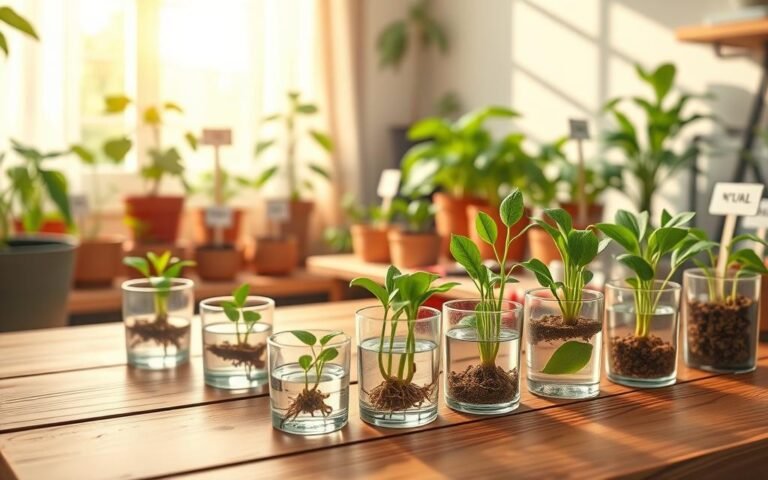
Seeds, cuttings and regrowing food scraps (for example, green onions) skip new plastic pots and retail packaging.
Volunteer sprouts from the compost bin can surprise you; gently transplant them rather than throwing them out.
Use community swaps and seed libraries
Seed libraries and community exchanges are a great way to access seeds and local expertise with near zero packaging.
When swapping, label items, disclose any pest history and pass on plants in reused containers.
| Option | Benefits | Notes |
|---|---|---|
| Local nursery stock | Less packaging, local adaptation | Ask about on-site propagation |
| Seeds & cuttings | Minimal packaging, cheap | Requires time and a little skill |
| Community swaps | Free or low-cost, social | Label clearly and check for pests |
Build a low-plastic, peat-free soil and potting mix
Good soil starts with choices that save resources and support strong roots. Healthy soil cuts the need for extra fertiliser, reduces water use and lowers the chance you’ll replace failing plants.
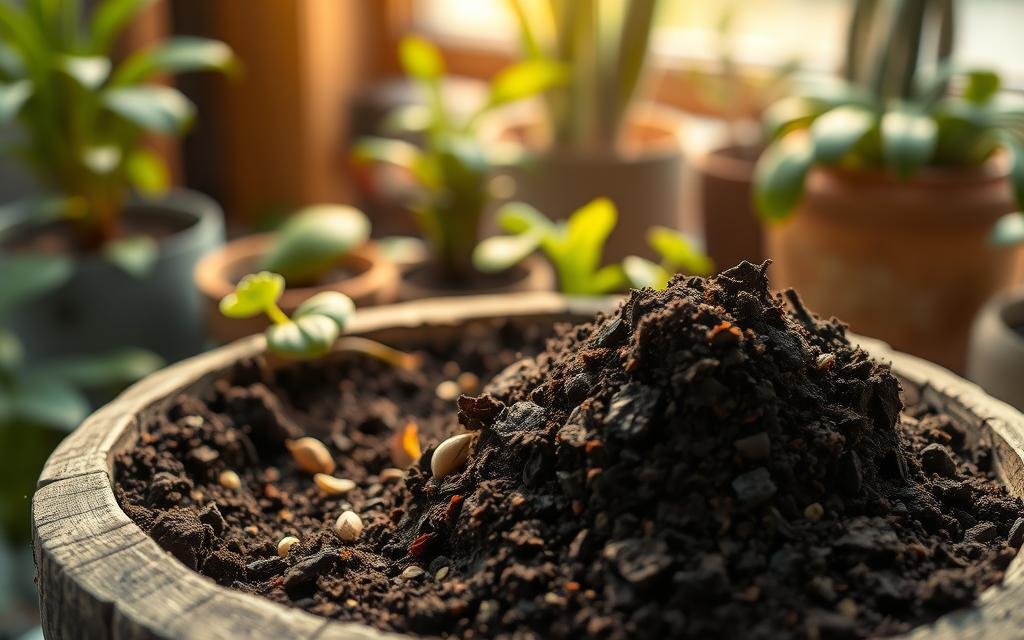
Compost basics for Australian households
Composting food scraps like vegetable peelings and coffee grounds makes valuable compost. Keep a balance of greens (food scraps) and browns (leaves, paper, clippings) to avoid smells.
From “black gold” to ready mix
Finished compost takes time; it isn’t instant. While it matures, blend partly weathered compost with a drainage medium so potting soil won’t stay overly dense around roots.
Peat-free and coconut coir
Peat-free is the better option: peat forms over centuries and harvesting harms wetlands. Coconut coir is a practical alternative that adds aeration and improves drainage as a by-product of coconut processing.
Buy smart and make soil over time
- Buy larger bags or bulk landscaping supplies and share with neighbours to cut plastic.
- Use mulch and hugelkultur-style beds so leaves and dead wood slowly build new soil.
Reduce plastic pots, containers and planters without sacrificing plant health
Begin with what’s already at home: count pots, sort sizes and set a “no new pots” baseline. This saves money and cuts unnecessary plastic.
Reuse plastic nursery pots first
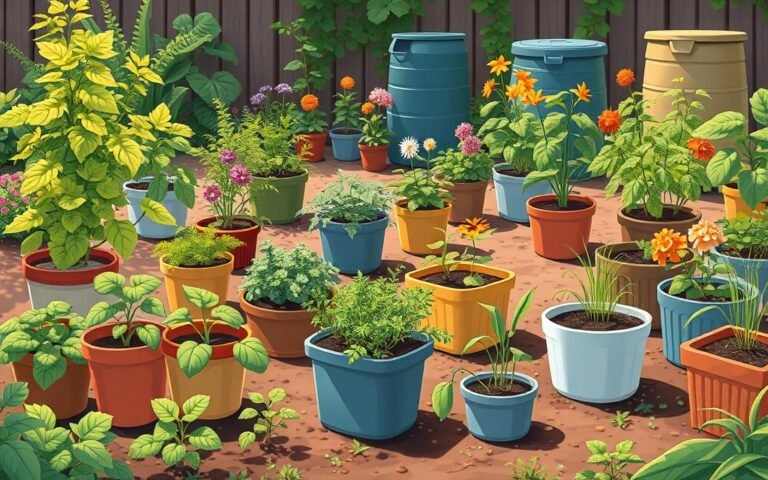
Reuse plastic pots as much as possible. Clean them, trim roots when repotting and only replace when cracked or warped.
Upcycle household containers — always add drainage holes
Food tubs, tins (smooth the edges) and takeaway containers make good temporary pots. Make drainage holes to prevent root rot and use a saucer to protect floors.
Choose longer-life alternatives and second-hand finds
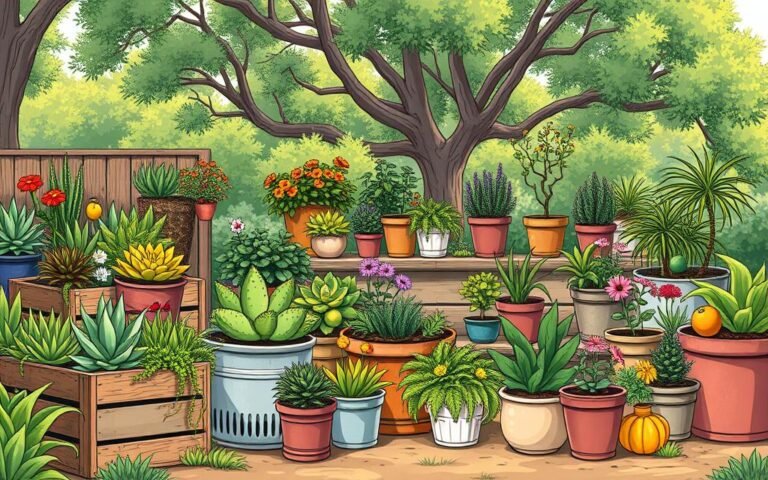
Terracotta lasts but dries faster; match it to drier-loving species and soak the pot before lifting a root-bound specimen to reduce damage.
Op shops and online marketplaces often have planters missing holes. A drill fixes most problems.
Lower-impact buys and simple DIY swaps
When you must buy, favour coir or bamboo options for durability. Replace plastic seed trays with newspaper or cardboard paper pots that break down at transplant.
Try burlap sacks for large crops like potatoes: roll the rim down to save soil and reuse sacks for 2–3 seasons.
“Start small, reuse what you have and choose durable materials when buying.”
Water-saving plant care habits that cut waste year-round
Small changes to how you collect and use water add up to steady savings and stronger growth. In Australia this saves money and helps through restriction periods.
Collect and store rainwater safely
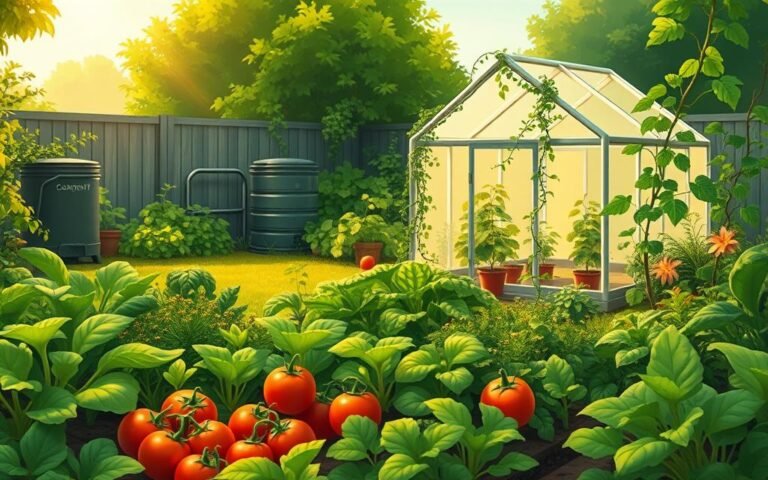
Capture roof run-off with a bucket under overflow or a closed barrel on the balcony. Decant rain into reused bottles or a watering can for easy pouring.
Reuse household greywater simply
Collect shower warm-up water or rinse water in a bucket. Use it promptly on hardy plants and ornamentals rather than pouring it down the drain.
Water smarter with saucers and targeting
Use saucers to catch nutrient-rich runoff. If a saucer still holds water, don’t water again — tip excess into another pot.
Make sure you water the root zone, not leaves, and adjust frequency to weather, pot material and species.
Mulch to reduce evaporation
Apply dry leaves, small amounts of grass clippings or shredded cardboard and paper as mulch. Mulch keeps soil cool, cuts watering sessions and slowly adds nutrients as it breaks down.
Practical tip: For more water-saving ideas for Australian homes, see home water solutions.
Feed plants with fewer inputs and less packaging
Good feeding starts with the soil you already have, not another bottle on the shelf. If your potting mix is refreshed through repotting or regular top dressing, many plants won’t need extra products.
Repotting and top dressing first
Top dress by adding a thin layer of finished compost to the surface of the potting mix, water it in, and let slow-release nutrients work over weeks. Repot larger specimens every 1–3 years to refresh the soil and roots.
When fertiliser is useful
Only use fertiliser for struggling specimens, very large plants you can’t repot, or heavy-feeding species. Observe leaf colour and growth rate before adding inputs.
Packaging-minimising rule
Choose concentrated formulas in the biggest practical bottle you can use before expiry. This one simple option cuts packaging and trips to the shop.
Compost is both a nutrient source and a soil conditioner. Turning kitchen scraps into compost reduces food waste and improves moisture retention so you water less.
“Refresh soil first; feed only when the plant clearly needs help.”
For more practical tools and swaps, consider community ideas like zero-waste gardening tools and ideas.
Low-waste pest control that still works
Hands-on prevention and simple mixes often beat single-use products. Start by inspecting and removing pests by hand, isolating affected specimens and keeping humidity and watering sensible. Prevention is the best long-term saver: healthier growth means fewer interventions.
DIY spray that’s gentle and effective
Mix 1 tbsp Dr. Bronner’s Sal Suds per 1 litre of water in a spray bottle. Shake to combine, spray evenly (undersides of leaves included), leave for a short time, then rinse with clean water to protect foliage.
Vinegar-and-soap traps for gnats and fruit flies
Pour some vinegar into a shallow dish and add a drop or two of liquid soap to break surface tension. Place near trouble spots and replace as needed. This cheap option reduces the need for single-use gadgets.
When retail products are needed
If sticky traps or biological bits are unavoidable, buy large sheets you cut to size and bigger packs to lower packaging per use. Keep sprays and traps out of reach of children and pets, and always spot-test on a small leaf first.
Go beyond the home: community swaps, sharing, and reusing packaging
Neighbourhood exchanges turn garden bits into shared resources and cut trips to the nursery. Treat your community as a sustainability multiplier: swapping saves money and reduces single-use packaging.
Swap cuttings, seeds and surplus seedlings
Swap seeds, cuttings and excess seedlings with neighbours. This avoids new plastic pots and printed labels and keeps material in circulation. Seeds are light to store and share; label them simply on paper packets.
Post plants with reused packaging scraps
When you must post a plant, reuse mailers, bubble wrap and cardboard scraps to cushion roots. Prioritise local trades to shorten transit and protect growth during shipment. This keeps packaging and shipping footprint small.
Borrow before you buy
Use tool libraries and Buy Nothing groups to borrow drills, pruners and soil sieves. Borrowing tools cuts clutter and cost, and second-hand options from op shops or online marketplaces extend item life.
- Where to look: community gardens, neighbourhood swap days, local Facebook groups, Buy Nothing communities.
- What to swap: seeds, cuttings, surplus seedlings and starter pots.
- Borrowing tools is a practical option for occasional jobs.
“Aim for close to zero waste by choosing reuse and sharing as the default path.”
For more ideas on living sustainably at home, see home sustainability options.
Keep it low-waste over time with seasonal routines
A short seasonal rhythm makes it easier to save resources and learn what your garden needs. Spend a little time at the end of each season to tidy, save, and note what worked.
Save seeds in paper packets and label them for next year
How to save seeds: let fruits or flowers ripen, dry seeds fully, then store them in labelled paper packets. Write plant, variety and date on each packet to avoid mix-ups next year.
Track what worked: watering, sun patterns and planting times
Keep a short log of watering needs during hot spells, where sun shifts across the garden, and the dates you sowed or transplanted. These notes cut repeated failures and save time and water.
Use fallen leaves and clippings as ongoing mulch and future compost inputs
Collect fallen leaves and small amounts of grass clippings to refresh mulch around beds and pots. Mulch keeps soil cool and later becomes material for composting.
- Seasonal checklist: end-of-season clean-up, seed saving, mulch refresh, brief notes for next year.
- Use free garden inputs—leaves and clippings—as the backbone of soil building.
- Make sure mulch is kept a little away from stems to prevent rot.
- Make sure stored seeds stay dry and pest-free.
| Task | When | Benefit |
|---|---|---|
| Seed saving (paper packets) | End of season | Reuse local genetics next year |
| Mulch refresh (leaves & clippings) | Quarterly | Retains moisture, feeds soil |
| Short notes (water, sun, dates) | After major changes | Fewer failed tries and less replacement |
Conclusion
Use one strong, simple change this week and build from there. A few practical shifts can keep your garden thriving while cutting unnecessary inputs.
Immediate wins: reuse existing pots, add saucers, mulch with leaves and small clippings, and start a small compost bin to feed your soil.
Choose peat‑free mixes and add compost or coir to boost resilience. Better soil reduces repeat purchases and ongoing waste, so you get healthier growth with fewer products.
In Australia, prioritise water: collect rain, reuse suitable household water, and water by observation rather than habit. For practical water‑saving swaps see water-saving swaps.
Try one change this week — save seeds in paper, set a rain bucket or join a swap — and let improvements grow over time.