This short guide shows simple ways to reuse everyday kitchen items as quick boosters for pots, balconies and small courtyards across Australia.
Composting cuts methane sent to landfill, but not everyone has space or time for a heap. If you don’t keep a bin, some food scraps can be used straight away to help soil and houseplants.
We’ll highlight three easy starts — banana peels, coffee grounds and eggshells — plus handy liquids like cooled cooking water and an onion-peel infusion.
Expect honest advice: these tips add nutrients and support soil life, but they are not a magic swap for balanced fertilizer in every case. You’ll learn quick prep, storage, what to avoid, how to match scraps to different plants, and ways to stop pests and smells.
Structure is simple: immediate-use scraps first, then liquid options, compact composting ideas, and finally plant-specific matching and safety tips. Reputable gardeners recommend modest amounts and simple handling like drying grounds and crushing shells.
Key Takeaways
- Reuse common scraps to cut landfill and feed soil in small spaces.
- Banana peels, coffee grounds and eggshells are quick, low-effort options.
- Simple liquids — cooled cooking water or onion-peel tea — can be useful.
- These methods support soil life but don’t replace balanced fertilizer entirely.
- Learn safe prep, storage and pest-prevention to avoid problems.
Getting started with zero-waste fertilising from the kitchen
Small changes in how you handle everyday scraps can feed soil and support beneficial microbes. In practice, “fertiliser” here means two things: direct nutrient boosts to plants and organic matter that feeds soil biology so nutrients become available over time.
What fertiliser means for soil, microbes and nutrients
Some items release quickly (diluted liquids), while others are slow‑release (eggshell powder). Compost sits between those extremes as a broad soil improver made by composting food and organic matter into rich amendment.
What to avoid adding to beds and pots
Avoid salty or oily foods, heavily processed leftovers and anything likely to smell or attract pests. In Australia, exposed scraps can lure rats, cockroaches and possums, so keep beds and small garden areas tidy.
Quick prep basics: rinsing, drying, crushing and storing scraps
Set up a small prep station at home: rinse suitable scraps, dry them, then crush or grind as needed. Dry used coffee grounds on a tray to reduce mould; rinse eggshells, dry on a windowsill, then crush or grind for storage.
“Manage moisture and label jars — wet items used quickly, dry powders last longer.”
Use labelled containers and a simple timing rule: wet, rich scraps need attention to avoid mould; dry materials keep longer and can be added slowly to beds and pots. For compact living, learn more about composting in small apartments.
Kitchen waste for plant fertiliser you can use straight away
Coconut, banana and coffee leftovers are easy single‑item fixes that give a fast nutrient boost without a full compost setup.
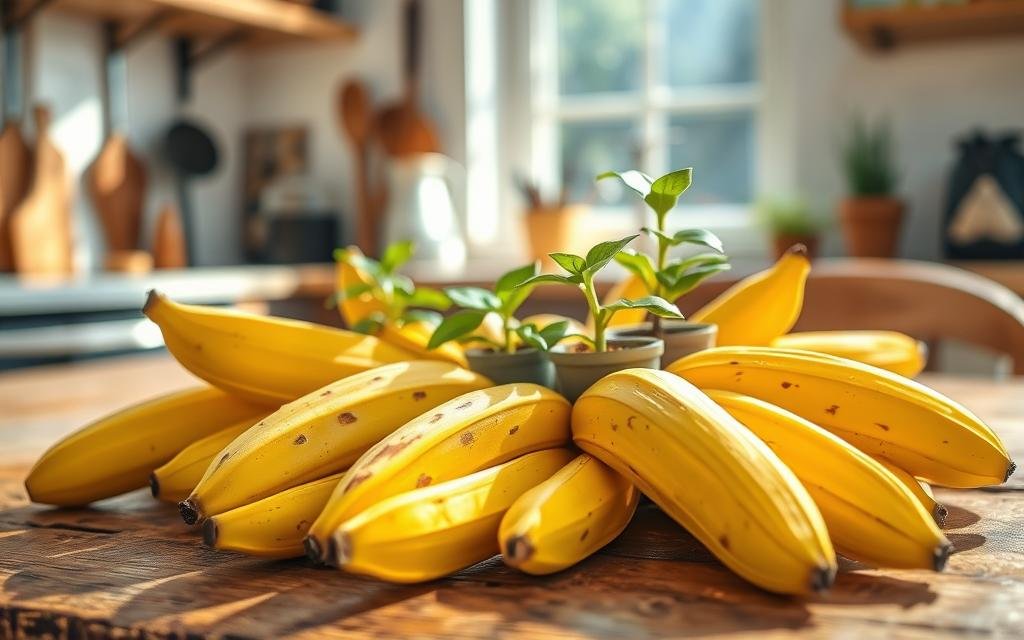
Banana peels: potassium to help flowering and fruit
Banana peels are rich in potassium, which supports bloom production and fruit set in roses, citrus, capsicum and many ornamentals.
Apply peels without attracting pests
Bury small pieces a few centimetres beneath the surface near (not on) roots. Keep peels covered and use chopped pieces to speed breakdown. This reduces smells and deters pests.
Quick banana peel liquid
Blend a peel with about a quart of water, strain and apply to soil immediately. Use the mix right away to avoid odour and microbial problems.
Coffee grounds: nitrogen and trace minerals
Used coffee grounds add nitrogen, calcium and potassium. Use modest amounts — about 1 tbsp in a pot or 1 cup across a garden patch — and sprinkle thinly before watering.
Pots vs gardens, acidity and mould
Be lighter in pots where airflow and drainage are limited. Dry grounds first to reduce mould. Avoid heavy layers that crust or stay wet around roots.
Eggshells: slow‑release calcium
Eggshells supply calcium. Rinse and dry, then grind to a fine powder. Store in a jar and sprinkle lightly, watering in to help release minerals over time.
“Start small, observe response, and adjust amounts rather than mixing many scraps at once.”
Read more on safe recycling methods at ways to recycle food scraps as and check simple zero‑single‑use tools at plastic‑free essentials.
Make simple liquid fertilisers from scraps and “waste water”
A small jar and a simple habit can convert rinsing and boiling water into gentle soil feeds.
Why liquids help: they are quick, easy to dilute and fit normal watering routines. This is a handy way to use small-space scraps without a compost bin.
Cooking water from vegetables, pasta and eggs
Save unsalted boiling water from vegetables, pasta or eggs. Cool fully before applying. Do not use salty or oily liquids. Keep a labelled jug near the sink and only collect plain cooking water.
Aquarium water — gentle feed and limits
Fresh aquarium water can supply nitrogen and trace phosphorus from fish waste. Avoid saltwater tanks and any chemically treated tanks. Do not use such water around edible crops.
Tea leaves and onion peel infusion
Tea leaves can go into compost or be lightly sprinkled as top-dressing; check tea bags for plastics first. To make an onion peel infusion, steep dry skins in warm, sealed water for a couple of days, strain, cool and use on indoor and container plants.
Simple compost tea or extract
Steep a shovel of finished compost or aged manure in ~20 L water for several hours to three days. Strain and dilute if strong. Apply to soil rather than leaves to reduce disease risk.
“Weed teas are possible, but they smell and need care; see the safety section for dilution and handling.”
Composting options for Australian homes with limited space
You don’t need a big yard to make useful compost; small systems work well in Australian homes.
Compost bin vs compost pile: choosing what fits your home
Choose a compost bin if you want tidy storage and fewer pests. A sealed bin suits backyards and council rules, and it keeps material contained.
A compost pile is easy to add bulky materials to and suits larger yards. It can look messy and dry out faster, so it needs more turning and attention.
Balancing food scraps with carbon materials like paper towel
Keep a simple rule: mix wet food scraps with dry materials. Think of food as “greens” and paper towel or shredded cardboard as “browns”.
If the bin smells, add more dry paper and cardboard. If it’s too dry and slow to break down, add a little water and more food.
| Option | Best where | Pros | Cons |
|---|---|---|---|
| Sealed compost bin | Small backyards, balconies with space | Tidy, fewer pests, neat appearance | Limited volume, needs balance of materials |
| Compost pile | Larger yards and community gardens | Handles bulky materials, simple to build | Can smell, attract pests, needs turning |
| Worm system (vermicompost) | Balconies, small homes | Efficient, fast breakdown, compact | Needs careful feeding and moisture control |
“Good compost improves soil texture, raises water retention and feeds garden beds — less reliance on packaged products.”
Match scraps to plants and soil for better results
Targeted feeding beats random additions — think soil chemistry and the growth goal before adding anything. Start by noting whether the green is making leaves or setting blooms and fruit.
Acid-loving species and when coffee grounds help
Coffee grounds suit acid-loving plants such as azaleas, gardenias, hydrangeas and blueberries. Use modest amounts mixed into compost or light soil. Avoid a thick layer that slows air flow and invites mould.
Watch for stress signs: slow growth, yellowing or fungal spots. If the soil is already acidic, skip added grounds.
Fruiting crops and timing potassium-rich feeds
When buds set or fruit forms, a potassium boost helps. Add chopped banana peels or a diluted peel extract at those stages to support bloom and fruit development.
Calcium support for beds and veg patches
Crushed eggshells supply slow-release calcium and can help lower local acidity like lime. Grind well and work into soil around susceptible crops. This is a long-term fix, not a quick cure for blossom-end rot.
- Practical way: use compost as the base and add targeted scraps when needed.
- Match scraps to current growth stage and soil tests where possible.
“Use small amounts, observe response, and let compost provide steady, balanced nutrients.”
Common mistakes and safety tips to protect plants, pets and wildlife
Missteps with home scraps are usually about timing, quantity and poor storage — not the idea itself. Knowing main failure modes helps you keep beds and garden areas tidy and safe.
Main failure modes: exposed food scraps attract pests, anaerobic breakdown causes sour smells, and repeated heavy applications can cause nutrient overload.
Preventing pests, smells and mess when burying food scraps
Bury chopped scraps several centimetres deep and cover soil firmly. Blend a banana peel with water and use immediately to avoid smells and to reduce attraction.
Keep lids secure on bins and clean spills quickly to deter rats and cockroaches. Do not leave peels or food on top of soil.
Salt, chemicals and “too strong” mixes: when dilution matters
Avoid salted cooking liquids, brines and chemically treated aquarium water. Such materials can burn roots and harm edible beds.
Weed tea ferments strongly and smells; dilute about 1:5 (1 L tea to 5 L water) before use to reduce scorch risk.
How much to use and how often to avoid nutrient overload
Use small, spaced applications rather than big dumps. Try light liquids fortnightly and occasional thin top‑dressings.
Dry coffee grounds before storage and apply sparingly in pots to reduce mould. Store scraps securely to protect pets and wildlife.
“Small, steady additions beat large, infrequent dumps — observe and adjust amounts over time.”
Conclusion
,Pick one easy method and run a short trial on a few containers before using it widely. Try burying a chopped banana peel, adding a spoon of dried coffee grounds, sprinkling crushed eggshell powder or using cooled cooking water on a test pot.
Right scrap, right place, right amount. Use small doses and avoid piling materials. This reduces pests and prevents nutrient overload in pots and beds.
Treat home compost as the long-term foundation while using liquids and targeted additions as quick top-ups. The main benefits are less landfill, fewer bought inputs and steady support to soil life.
Keep it simple, observe results over weeks and adjust with the seasons across Australian conditions.