Give your backyard or balcony a tidy, practical upgrade with simple markers made from items you already have at home. Clear tags stop seedling mix-ups and save time at harvest.
This short guide shows one reliable base method using paint sticks or craft sticks, plus a menu of other recycled marker styles — from wood and cork to metal and stones. Most sets take only a few hours, including dry time, so they suit family projects on weekends.
We avoid single-use plastic tags and focus on reuse, durability and contrast so names stay readable under Aussie sun, heat and summer storms. You’ll also find kid-friendly options and notes on when adult tools like spray sealers or metal stamps make sense.
For ideas on repurposing containers and labels around the garden and home, see a handy resource on natural cleaning and reuse at sustainable works.
Key Takeaways
- Use recycled household items to make practical, long‑lasting plant markers.
- One base method (paint/craft sticks) suits most gardens and skill levels.
- Prep, contrast and sealing matter for Australian sun and rain.
- Avoid single-use plastic tags; repurpose what you already own.
- Include kid‑friendly builds; reserve adult tools for heavy-duty jobs.
Why plant labels matter in an Aussie garden
A simple tag can save hours of guessing in a crowded veggie bed. When beds shoot up fast, many young plants look identical. That’s when clear markers stop mistakes and speed up chores.
Identify plants confidently when seedlings all look the same
Seedlings often share the same colour and shape. Young parsley and carrot tops are a classic mix-up.
Good plant markers help you identify plants quickly. They also mean partners or housemates can harvest the right herb for dinner.
Add personality and garden art without plastic waste
Labels can be low-waste garden art. Use recycled bits to add little bursts of colour, simple sketches or a colour code. Personality can be as basic as a bold plant name and a tiny sketch.
Make it a family-friendly project that builds lettering skills
This is a great project for family time. Kids practise letters and spacing while having fun. Start with block letters, then try small icons for each plant name.
- Quick win: readable contrast matters.
- Durability tip: seal and mark the soil line so names stay visible.
Gather recycled materials and supplies that work well outdoors
Collect sturdy bits and bobs that will survive watering and a few seasons outdoors. Choose material types that resist rot and will take a coat of paint or glue easily.
Reused household material ideas
- Wood: paint stirrers, jumbo craft sticks, small offcuts — good surface for paint and letters.
- Metal and hard items: old spoons and metal tags that endure sun and wet.
- Other survivors: rocks, corks and pruning offcuts for low‑maintenance markers.
Quick grab-and-go supplies
Lay down newspaper to protect your surface, then gather non-toxic acrylic or tempera paint, brushes and a water cup.
For lettering use cotton swabs for fine hand work, alphabet stamps for consistent letters and pencils to plan size and placement.
Kid-safe choices and adult tools
Choose craft-grade, non-toxic paint for young helpers. Reserve solvent sprays and permanent marker use for adults only.
“A light background with dark letters gives the best contrast from a step away.”
Sealing for long term outdoor use
Apply 2–3 thin coats of outdoor Mod Podge or clear acrylic spray. Thin coats dry faster and resist peeling better than one thick coat.
Allow 15–20 minutes between coats and wait 48–72 hours for final curing before outdoor placement to avoid tacky finishes.
| Material | Works well for | Best surface prep |
|---|---|---|
| Paint stirrers / craft sticks | Clear hand lettering, stamping | Sand lightly; prime with acrylic base coat |
| Rocks / corks | Weatherproof, wind‑proof markers | Clean surface; use acrylic paint |
| Old spoons / metal offcuts | Long term, decorative markers | Wipe clean; use metal paint or stamps |
eco friendly plant labels diy tutorial using paint sticks or craft sticks
Begin with a short list of plant names and a protected work surface. Write full names and varieties so you avoid confusion later. Lay out sticks in batches to paint several at once.
Prep, size and contrast
Plan size so letters fill the usable area. Pick a light background and dark letters for best readability from standing height.
Create a background coat or collage
Option one: apply a thin acrylic base coat and let it dry ~30 minutes. Option two: glue cut bits from seed packets or magazines for a colourful collage, then seal the paper with one thin coat of adhesive.
Add letters
Use a fine brush or cotton swab for hand lettering, stamps for uniform text, or cut letters from magazines. For tricky names, print letters from your computer and glue them on.
Mark the soil line, dry time and sealing
Mark ~3 inches (7–8 cm) from the bottom so names stay above the side of the bed. Allow 30 minutes between layers and do touch-ups after letters set.
Seal both sides with 2–3 thin coats of outdoor Mod Podge, one side at a time, 15–20 minutes between coats. Let cure 48–72 hours before outdoor use. Optional clear spray sealer should be used outdoors by an adult.
| Step | Method | Time / Tip |
|---|---|---|
| List & prep | Write names; cover surface | 10–15 mins; batch work |
| Background | Paint base or paper collage | 30 mins between coats |
| Lettering | Hand, stamp, cut or print | Use a fine brush; cotton swabs for detail |
| Seal & install | 2–3 thin coats front/back | 15–20 mins between coats; 48–72 hrs cure; pre-wet soil or make pilot hole |
Creative recycled plant marker ideas beyond sticks
If you want quick, sturdy or decorative options, these recycled marker ideas suit every spot in your garden.
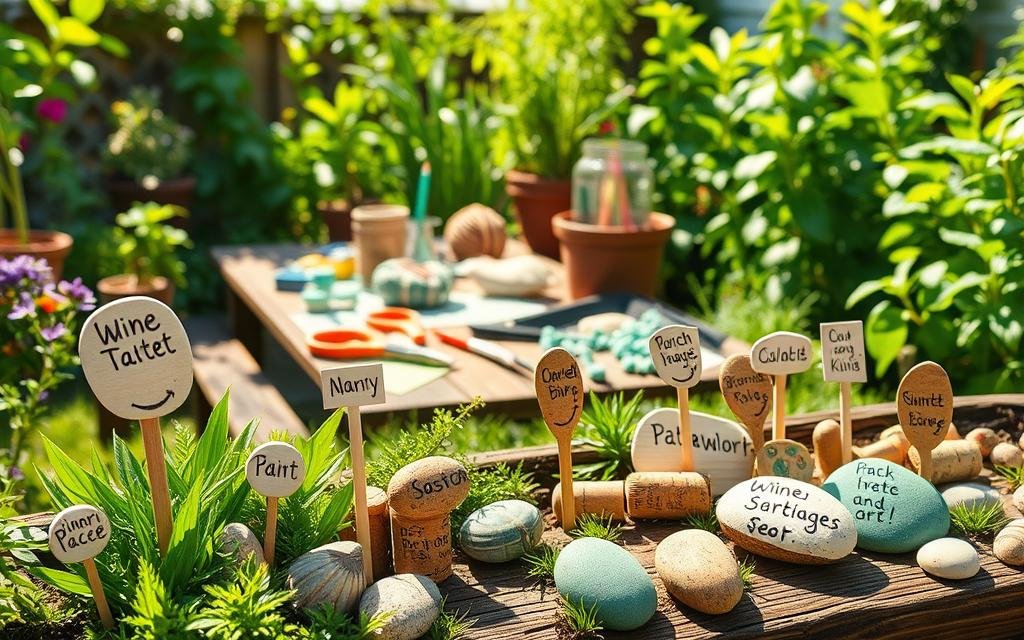
Painted rocks for sturdy, wind-proof garden markers
Why choose rocks: their weight keeps markers put in exposed beds and pots.
Use non-toxic acrylic paint and finish with an outdoor clear sealer such as Mod Podge. Rocks handle rain and watering well and stay readable for seasons.
Twig and stick markers from pruning offcuts
Strip a patch of bark to expose raw wood, then write with a permanent marker or use a wood-burning tool for a long-lasting finish.
Zero-waste tip: cut to a length that sits just above the soil line so names stay visible.
Wine corks on skewers for quick labels
Push a skewer into a cork, write the name with a permanent marker, and you have dozens of quick markers for newly sown beds.
Chalkboard paint markers you can erase and reuse
Coat stirrers or small boards with chalkboard paint, then write with a liquid or oil-based chalk pen.
These work well for seasonal pots and change each season without waste.
Metal stamped spoons for long-lasting, gift-worthy tags
Flatten an old spoon between wood with a hammer, stamp letters, darken with a permanent marker and polish with steel wool.
Result: durable, attractive markers that suit herb pots and presents.
Clay plant markers with stamped or carved names
Roll oven-bake clay to ~1/4 inch, stamp or carve names, shape a stake end and bake. Seal if you want extra protection.
Wood-burning tool lettering for permanent-looking markers
Pyrography gives crisp, permanent text on wood. This method is best for adults, but it creates classic garden art built to last.
“Match marker style to location — heavy rocks for wind, spoons for pots, chalk for seasonal beds.”
| Marker type | Best for | Quick how-to |
|---|---|---|
| Painted rock | Exposed beds, windy spots | Paint → seal with outdoor Mod Podge |
| Cork on skewer | Seed trays, new beds | Push skewer in cork → write with permanent marker |
| Stamped spoon | Herb pots, gifts | Flatten → stamp → darken letters → polish |
For more step-by-step methods and extra ideas, see making plant labels.
Make your plant labels last long in Australian conditions
To keep names readable through heatwaves and downpours, focus on the clear coat and how you insert stakes into the soil. Australian sun and heavy summer rain both test whether tags will last long or peel away after a season.
Choosing a clear coat and applying multiple thin layers
Pick a product made for outdoor use. Apply 2–3 thin coats of outdoor Mod Podge to both sides, leaving 15–20 minutes between each coat. Allow 48–72 hours final drying time before outdoor use.
When a permanent marker or paint marker makes sense
Permanent marker is quick for corks, metal and some woods, but it can fade unless sealed. Paint markers are bold but may contain solvents and are less suited to kid projects.
Installing markers gently so they don’t snap
Do not treat labels like stakes. Push gently rather than hammering. If soil is compact or dry, water first and wait a few hours, or make a pilot hole with a screwdriver or butter knife.
“A quick mid‑season check and a touch-up coat will keep names clear through harsh summer sun.”
| Action | What to do | Notes |
|---|---|---|
| Sealing | 2–3 thin coats each side | 15–20 mins between coats; 48–72 hrs cure |
| Marker choice | Permanent or paint markers for durable surfaces | Seal after marking; avoid for kid projects if solvent-based |
| Installation | Push gently; pre‑wet or make pilot hole | Don’t hammer; avoid snapping stakes in compact soil |
What to label and when to update markers across Australian climate zones
Timing and tidy tags together stop mix-ups and keep harvests on schedule across different Australian zones.
Using climate zones to plan sowing and avoid mix-ups with seed packets
Write more than the crop name on your marker. Add variety (for example, cherry vs slicing tomato), the sowing date and the days to maturity.
This little detail helps match seedlings to the right seed packets when beds get busy.
Microclimates, short seasons, and “days to maturity”
Broad zones matter, but local spots differ. A frost‑free courtyard behaves unlike a cool coastal bed.
In short 6–12 week seasons, pick varieties that suit and mark the plant name plus maturity days so you know when to harvest.
Swapping, reusing, or composting labels at season’s end
Refresh markers at transplanting, thinning and when you rotate beds. These are the times seedlings look most alike and mistakes happen.
- Keep reusable tags in a storage tin for the next project.
- Compost truly biodegradable twig markers.
- Optionally print a master list from your computer to plan sowing times next year.
| Zone | Example city | Quick tip |
|---|---|---|
| Tropical | Darwin / Townsville | Sow year‑round; note heat‑tolerant varieties |
| Arid | Alice Springs | Water smart; label sow dates for winter crops |
| Subtropical | Brisbane | Stagger sowings and keep seed packets close |
| Temperate | Sydney / Adelaide | Use mid‑season checks and touch‑up coats |
| Cool temperate | Melbourne / Hobart | Prioritise 6–12 week varieties and clear names |
“Label the variety and date — it saves time and keeps seedlings matched to their seed packet.”
Conclusion
Handmade tags let you spot seedlings at a glance and cut garden guesswork. Quick, recycled markers reduce plastic waste and make harvesting easier while adding a little personality to beds and pots.
Key durability tips: use high‑contrast lettering, mark a clear soil line, and seal with several thin coats, allowing full cure before outdoor use.
Start with one starter method — paint stick labels — and choose an upgrade (rocks, spoons or a chalkboard option) for more permanent markers. For kid-friendly ideas and step-by-step projects, see garden markers.
Try this: pick three plants to label this week, save a small stash of recycled materials, and build a reusable set to use next season.