
Indoor recycling of kitchen scraps is a brilliant way to cut household waste and feed potted plants. But small process slips can turn a handy system smelly and slow. This intro lists the usual faults and shows quick fixes you can use in Aussie flats, laundries or balconies.
In compact homes, odour control, pest prevention and tidiness matter more than in a backyard heap. You’ll learn how healthy breakdown should look and smell, the fastest reset steps, and the daily habits that speed things up.
The core idea behind every fix is simple: manage air, water and the right mix of brown and green inputs so microbes stay active. Expect practical, step‑by‑step troubleshooting for a soggy bin, ammonia smells, fruit flies or a pile that won’t heat.
Final payoff: finished material boosts potting mixes and balcony beds, improving soil structure and plant health. For compact setups, see a helpful guide on apartment systems at how to compost in small apartments.
Key Takeaways
- Keep aeration, moisture and carbon:nitrogen balance as your top priorities.
- Bury fresh food under browns and test moisture like a damp sponge.
- Use vermicompost or Bokashi for tight spaces to cut odour and pests.
- Turn or aerate regularly to speed decomposition.
- Finished material adds nutrients and structure to potting mixes and balcony beds.
What “good” indoor compost looks, feels and smells like
A healthy mix gives a clear set of signals you can check fast. When microbes are active the centre may feel a little warm and the pile should smell earthy, like bush soil after rain.
Earthy scent, warm centre and crumbly texture
Good baseline: dark colour, crumbly texture and a soft, soil‑like aroma. Avoid slime or glossy wet patches; that shows excess water and low oxygen.
Why warmth matters: heat means microbes are busy. Higher temperatures speed decomposition and cut the time to finished material.
Quick 10‑second sensory checklist
- Smell test — earthy or sharp?
- Squeeze test — damp sponge, not dripping.
- Visual scan — mostly broken-down material, few recognisable scraps.
Warning odours and what they usually mean
Ammonia or a sharp chemical smell points to too much nitrogen (greens). Sewage or rotting‑egg smells signal low oxygen and anaerobic pockets.
“Bad smells are an early signal — act fast to rebalance air, moisture and brown material.”
| Sign | Likely cause | Quick fix |
|---|---|---|
| Earthy, warm centre | Balanced microbes | Maintain aeration and routine |
| Sharp ammonia smell | Too many greens / high nitrogen | Add dry browns and mix |
| Rotting‑egg / sewage smell | Anaerobic, too wet | Turn, add absorbent material |
Reality check: small, cool bins compost more slowly. With simple adjustments to air and moisture, the process should still move forward over a sensible time frame.
Compost mistakes indoor gardeners make that slow decomposition and stink out the house
Limited volume and tight lids mean a small system can go wrong fast. In flats and on balconies there is less airflow, more wet kitchen scraps and little thermal mass compared with a backyard garden pile.
Why the stink cycle starts: when oxygen falls, anaerobic microbes take over and release sewer‑like odours. That switch stalls composting and attracts pests.
Quick reset: rebalance, aerate and check moisture
- Pause inputs — stop adding fresh waste until balance returns.
- Add carbon — shredded paper, dry leaves or sawdust to absorb moisture and cut smell.
- Mix well — aerate by hand or with a tool to restore oxygen.
“A short stop, a handful of browns and a good mix often bring a smelly bin back to life.”
Decision guide
- If wet and smelly → add shredded paper or leaves and aerate thoroughly.
- If dry and inactive → add a small amount of greens and water, then mix.
Practical tips: keep room airflow, wipe spills and empty leachate trays promptly. These small steps stop odours from spreading and help the composting process recover so the finished material can benefit pots and the garden.
Putting the wrong kitchen scraps and food scraps in the bin
Putting the wrong food into a countertop bin is a quick way to invite odours and unwanted visitors. Small systems lack the heat and volume to handle high‑risk inputs, so choose what goes in carefully.
High‑risk inputs and why they’re a problem
- Meat, seafood, greasy foods and dairy — these rot fast, stink and draw pests like flies and cockroaches.
- Leftover oils or fatty takeaway residues also promote rancidity and vermin.
Pathogen and contamination risks
Keep out: pet waste and soiled nappies. They can carry harmful pathogens.
Avoid treated grass clippings, treated‑wood sawdust, diseased plants and weed seeds. They can introduce chemicals or spread problems to your plants.
Safe everyday food choices
- Fruit and vegetable peelings
- Crushed eggshells
- Coffee grounds and tea bags (remove staples, check for plastic)
Prep and quick fixes
Drain wet foods, chop large pieces and freeze scraps if you can’t add them right away.
Bury it: always cover fresh scraps with a layer of dry paper, cardboard or leaves plus a sprinkle of soil or finished material to cut smells and reduce pests.
“If a banned item slips in, remove what you can, then add extra browns and aerate to halt odours fast.”
Forgetting to shred paper, cardboard and other bulky browns
Tossing whole sheets of paper or large cardboard into a small bin can quietly stall the whole breakdown process. Bulky layers tend to mat, hold water and block airflow. That creates mouldy pockets and a slow, smelly batch.
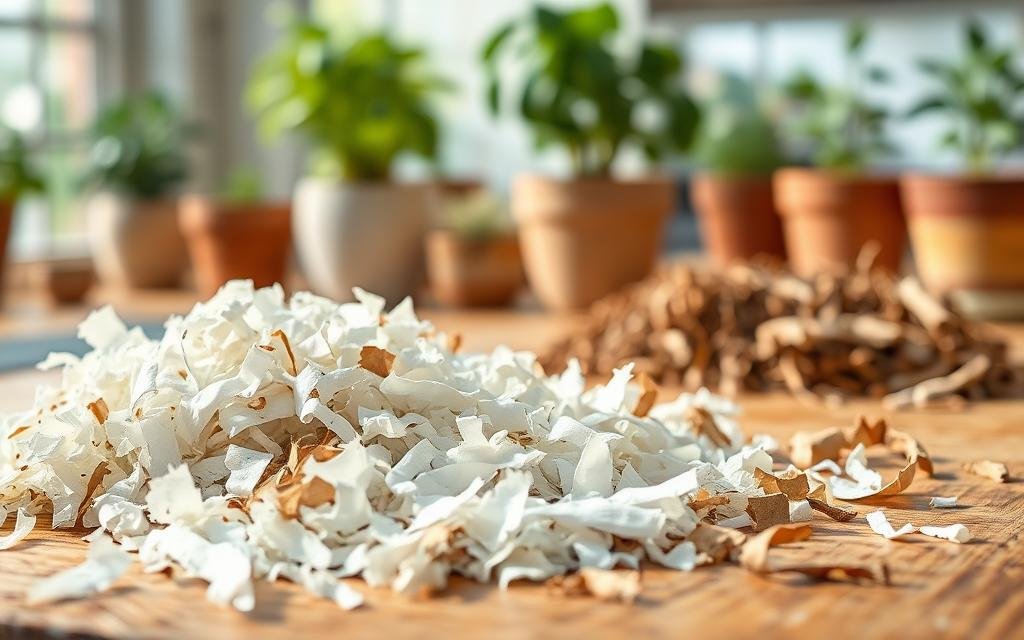
Why unshredded paper goes mouldy and blocks oxygen
Flat sheets trap moisture and reduce exposure to oxygen. Microbes need air to work. When oxygen can’t circulate, wet layers go mouldy and decomposition slows.
Simple prep: shred, tear or cut into small pieces before adding
Apartment‑friendly methods: hand‑tear into strips, use scissors, or run envelopes and thin card through a small shredder. Thick boxboard should be torn or cut into small pieces.
- Smaller pieces increase surface area for microbes.
- They mix better with greens and avoid anaerobic zones.
- Keep a paper bag of shredded browns near the bin for quick coverage.
| Sign | Cause | Prep / Fix |
|---|---|---|
| Mouldy layers | Whole sheets matting | Tear or shred the paper into strips |
| Wet pockets | Thick card holds water | Cut boxboard into small pieces before adding |
| Poor air flow | Blocked oxygen paths | Mix materials and add dry shredded paper |
Avoid glossy, laminated or heavily treated paper and heavily inked receipts. They do not break down well and may contain unwanted chemicals.
Getting the greens-to-browns balance wrong (carbon vs nitrogen)
The simplest rule most people skip is this: match dry, fibrous material with fresh kitchen waste so microbes can work without stalling.
What counts as browns and why it matters
Browns are carbon-rich items such as dry leaves, straw, shredded paper, sawdust or untreated wood shavings. They absorb moisture and keep air pockets open.
What counts as greens
Greens supply nitrogen. Examples are kitchen scraps, fresh weeds and untreated grass clippings. These materials feed microbes but are wet and can compact.
Easy mixing guide
Remember a simple rule: aim for about three to four parts browns to one part greens. Use similar-sized containers (a cup or jar) so the ratio is easy to eyeball.
Quick fixes for common imbalances
| Problem | Cause | Fix |
|---|---|---|
| Mushy, smelly | Too many greens / low carbon | Add dry carbon-rich material and mix well |
| Dry, inactive | Too many browns / low nitrogen | Add greens sparingly and moisten, then mix |
| Slimy heat spikes | Fresh grass clippings dumped all at once | Add browns in layers; add clippings in small amounts |
Tip: variety matters. A steady blend of different browns and greens gives a stable environment and fewer odour spikes. Keep an eye on the balance and adjust with small handfuls of carbon or greens as needed.
Letting moisture get out of whack indoors
Moisture swings in a small bin happen fast and can halt breakdown if you don’t act quickly.
Why it swings wetter indoors: kitchen scraps are water‑heavy and limited airflow and low evaporation in flats push moisture up. That extra water squeezes oxygen out and invites anaerobic bugs that smell sour.
Too wet — what to watch for
Pooled liquid, a heavy sludgy texture and a sharp sour smell are clear signs. Reduced airflow and compacted layers mean oxygen is low and anaerobic conditions have set in.
Too dry — what that looks like
Dusty browns, no warmth and very slow change are signals that microbes have stalled. Scraps dry out and fail to break down without enough moisture.
Fast fixes and the squeeze test
Squeeze test: aim for a wrung‑out sponge — moist but not dripping.
- Too wet: add dry materials such as shredded paper, dry leaves or straw, then mix to restore air pockets. Leave the lid slightly ajar if pests aren’t a risk.
- Too dry: mist or sprinkle water while mixing. Add small amounts and test often to avoid soggy pockets.
Prevention: every time you add wet scraps, drop in a handful of browns to keep moisture stable.
For more on avoiding common problems, see this handy guide: common composting errors.
Skipping aeration and ending up with an oxygen-starved compost bin
A blocked pile suffocates the microbes that should be doing the hard work. Soft food and layered paper settle into dense pockets, and the centre can rapidly lose oxygen. Without regular air flow, decomposition slows and odours appear.
Why the centre compacts and needs air
Soft scraps collapse into gaps. Paper or cardboard mats and wet clumps seal those gaps and cut off oxygen where it’s most needed.
Result: the middle becomes soggy and inactive while the outer layers look unchanged.
Indoor-friendly aeration methods
- Use a hand fork, sturdy spoon or trowel to lift and mix without making a mess.
- Push a dowel or skewer vertically to create simple air channels.
- Work in small batches: remove a portion, mix, then return it to the bin so the pile stays manageable.
Using tumblers and a simple turning habit
Don’t overfill a tumbler — contents must tumble, not just slide. Aim to turn once or twice weekly.
A quick mix every few days or a full turn weekly keeps oxygen moving and moisture even.
Tip: keeping the system aerobic is the easiest way to stop sour, rotting‑egg smells and speed overall breakdown.
Expecting heat and speed without the right setup
Microbial activity hinges on temperature, so don’t expect miracles from a tiny heap. Many apartment systems simply lack the mass and insulation that give big outdoor piles their quick turnover.
How temperature affects microbes and time
Warm conditions speed microbial work and shorten the time to finished material. Cooler conditions slow everything down and extend the process into weeks or months.
When a pile won’t heat up
If the pile stays cool, check three common culprits: it’s too dry, too brown-heavy, or too small to hold heat. Any of these will stall microbial activity.
- Too dry: add water while mixing to reach a wrung‑out sponge feel.
- Too much carbon: add fresh greens in small amounts and mix well.
- Too small: batch scraps so the heap gains bulk and retains warmth.
Cold weather and indoor placement
Place bins where temperature is stable. Avoid direct sun behind glass — that can overheat and dry contents — and stay clear of heaters or radiators that sap moisture.
Realistic expectation: with steady management, breakdown will show progress in weeks, but allow months for a small system to finish without fuss or bad smells.
Not “seeding” the pile with microbes at the start
A slow‑starting pile is usually a numbers game: the right microbes are present but too few to act fast. Microorganisms drive decomposition, and their populations take time to build. A little seeding can speed that early stage without changing your routine.
Starter options and what they add
Commercial starter gives a concentrated mix of selected microbes and often enzymes. It can kick‑start activity quickly, especially in cool homes.
Handful of garden soil supplies a broad local microbe community and grit that aids structure. It’s low‑cost and effective if you have access to healthy soil.
Scoop of finished compost is the best source of diverse organisms and established colonies. It also brings micro‑biodiversity that adapts well to your specific materials.
How to apply the seed
- Sprinkle small amounts evenly through the layers rather than dumping in one spot.
- Mix gently to distribute microbes and avoid creating dense pockets.
- If you lack garden access, ask a neighbour or buy a small bag of finished product from a nursery.
Remember: seeding helps, but moisture, oxygen and correct balance still control progress. Treat seeding as a useful nudge, not a fix-all.
“A few cupped scoops of active material often turns a quiet bin into a lively system within days.”
| Option | What it supplies | Best use |
|---|---|---|
| Commercial starter | Concentrated microbes & enzymes | Cool homes or when you need a fast boost |
| Garden soil (handful) | Local microbial community & structure | Low cost; good if you have healthy soil |
| Finished compost (scoop) | High microbe diversity & active colonies | Best overall; adapts to your materials quickly |
Continuously adding fresh scraps and never letting a batch finish
A bin that never gets a break rarely reaches a finished, stable state. Constant inputs keep fresh scraps and partly broken-down material together. That stops the centre from curing and prolongs odours and uneven breakdown.
Why a “never-ending” pile delays maturity
Every new dump resets the biological clock. Microbes shift back to fresh-food activity and the pile never reaches the quieter curing stage. Over weeks and months this means you rarely see a clean, crumbly end product.
Better workflow: pause inputs and let a batch finish
Simple systems: run two containers — one active and one curing — or stop adding for a set period so one batch can stabilise.
Realistic timeframes: with steady care, material can finish in about three weeks to three months depending on heat and handling.
Speeding up the process the practical way
Shred bulky materials and chop kitchen scraps so microbes have more surface area. Increase aeration by turning, poking air channels, or using a tumbler to speed the biological process.
- Add small, well-covered portions rather than big dumps.
- During a pause, store new scraps in a sealed container in the freezer or use your council green bin.
- Mix and test moisture often to keep activity steady.
“A short pause and a bit of extra air are often all you need to turn a forever-pile into a finished batch.”
Using the wrong bin setup, location or cover for indoor conditions
Good design saves effort. A tidy unit in the right spot stops leaks, controls smell and keeps the house pleasant. The right choice also helps you keep compost as a simple daily habit.
Why multiple piles or a double‑chamber bin helps
Two small containers or a double‑chamber system lets one batch cure while you add fresh material to the other. That avoids constant disruption of the finishing material.
Some people use three stages — ready, decomposing and new — as an aspirational workflow for a steady supply for pots and garden beds.
Placement tips for flats and small homes
Keep a bin close to the kitchen so you actually use it, but choose a spot with some airflow and an easy‑clean floor: laundry, balcony or a ventilated cupboard work well.
Good placement reduces spills and prevents pests from finding a food source.
Lids and covers: balance neatness with airflow
Covers retain heat and hide mess, and may be required by councils. Avoid airtight sealing; leave a few inches or add vents so oxygen can enter.
“The easiest system is the one you use every day — place it where it’s handy and ventilated.”
| Feature | Benefit | Tip |
|---|---|---|
| Two‑bin setup | Continuous workflow | Switch every few weeks |
| Covered bin | Retains warmth, deters pests | Keep small air gap |
| Accessible spot | Encourages use | Near kitchen, on easy‑clean floor |
Using compost too soon or storing finished compost poorly
Let a batch finish before you use it. Properly finished material improves potting mixes and helps plants thrive.
How to tell it’s ready
- Dark colour and a crumbly texture.
- Earthy aroma with little recognisable food scraps.
- Major reduction in volume and no strong smells.
What to do with leftovers
Sift out stubborn bits such as eggshells or corn cobs. Return them to a new batch so nothing goes to waste.
Timeframes and storage basics
Depending on heat, moisture and aeration, decomposition can take a few weeks to a few months.
Storage: keep the finished product covered so it stays slightly moist and microbe‑active. If storing outdoors, protect from heavy rain and place off the ground if pests are a concern.
| Storage option | When to use | Key tip |
|---|---|---|
| Lidded tub with vents | Indoor, small amounts | Keep lid closed; open occasionally to check moisture |
| Covered heap on ground | Outdoor bulk storage | Use tarp; allow some airflow and keep off direct soil if pests risk |
| Sealed bag for short term | Transport or short storage | Don’t let it dry to dust — open and rehydrate if needed |
“A well‑cured and stored product keeps nutrients and microbes ready to boost your soil and plants.”
Conclusion
Fixing one simple habit often brings big improvements in weeks, not months. Most composting problems come from the same few faults: wrong inputs, poor balance, too much moisture and low oxygen.
Fast fix: add dry browns, mix to aerate, adjust moisture and pause new scraps until activity returns. Avoid high‑risk items such as meat, dairy and pet waste — they invite smell and pests.
Small habits pay: shred paper, bury fresh food under dry material and turn the bin weekly to keep airflow steady. Do this and you’ll cut waste trips, tame odours and feed your pots and balcony garden with steady nutrients.
Try one correction today — your pile will show progress within days, no fancy gear required.