If you garden in Australia, you love making your outdoor space beautiful. It brings you joy and helps the planet 🌿. By using eco-friendly gardening ways, you can help the environment and have a great garden.
Eco-gardening means working with nature. It’s about saving water, cutting down waste, and helping different plants live together. This makes your garden lively and resilient. Here, we’ll share easy tips to cut down waste and support sustainable gardening practices.
Key Takeaways
- Simple ways to reduce waste in your garden
- Eco-friendly gardening practices for Australians
- Tips for conserving water and promoting biodiversity
- Benefits of adopting sustainable gardening methods
- Easy ways to create a vibrant and resilient garden
The Garden Waste Challenge in Australia
In Australia, up to 70% of household water is used outdoors. Gardeners face a big challenge with garden waste. We need to manage it well to protect our environment.
Common Sources of Garden Waste in Aussie Backyards
In Aussie backyards, garden waste comes from many places. This includes pruned branches, fallen leaves, and uprooted weeds. These materials can pile up fast, taking space and harming nature if not handled right.
Environmental Impact of Green Waste in Our Local Ecosystems
The impact of garden waste on our environment is big. Green waste in landfills makes methane, a harmful gas. Experts say, “how we deal with garden waste affects our local ecosystems and climate change.” By using green gardening methods, we can help our planet.
Mastering Composting for Australian Climate Zones
To make your garden thrive in Australia’s tough climate, learning to compost is key. Composting turns kitchen waste and garden scraps into soil that’s full of nutrients. It also helps cut down on landfill waste and methane.
Setting Up Your Compost System for Hot and Dry Conditions
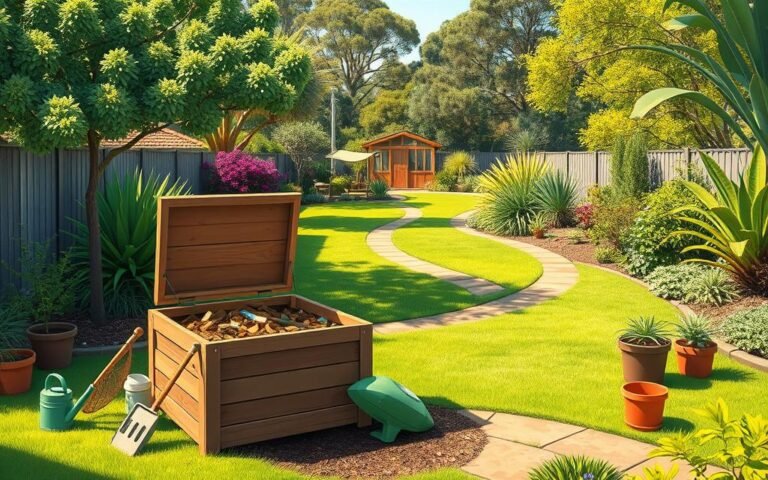
Setting up your compost right is important in Australia’s heat and dryness. Pick a spot that’s shaded, mix ‘green’ and ‘brown’ materials, and keep it moist. Turning it often helps it break down faster by keeping air flowing.
What to Compost and What to Avoid in Australian Gardens
For good composting, mix ‘green’ stuff like kitchen scraps and grass clippings with ‘brown’ stuff like dried leaves and paper. Don’t add weeds, sick plants, or pet waste to avoid problems. For more tips, see top 5 tips for successful composting.
Worm Farming: The Australian Way
Worm farming is great for small gardens in Australia. It uses red wiggler worms to turn food waste into compost. It’s good for both inside and outside and can be fun for the whole family.
Troubleshooting Common Composting Issues in Our Climate
Odors, pests, and slow composting can be fixed. Keep the right mix of materials, keep it moist, and turn it often. Also, watch the temperature to keep microbes alive.
| Composting Material | Category | Nutrient Value |
|---|---|---|
| Kitchen Scraps | Green | High in Nitrogen |
| Dried Leaves | Brown | High in Carbon |
| Grass Clippings | Green | High in Nitrogen |
Learning to compost can greatly reduce waste, make your soil better, and help the planet.
Mulching: A Key Strategy for Sustainable Gardening Waste Reduction
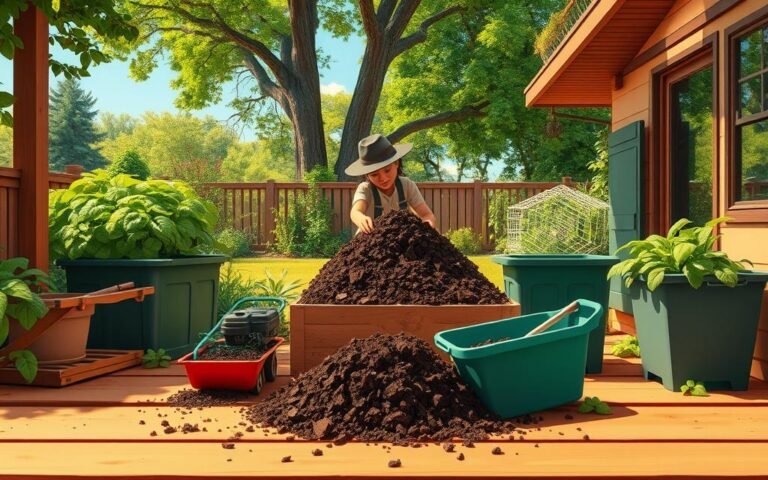
Mulching is a simple yet effective way to cut down garden waste. It makes your garden more eco-friendly. By using organic material on the soil, you can save water, stop weeds, and make the soil better.
In Australian gardens, mulching is especially helpful. The climate here can be tough.
To mulch well, you can use wood-based mulch, shredded leaves, or grass clippings. For more tips, check out this resource.
Mulching helps a lot with garden waste. It also makes the soil healthier. It’s a simple way to make your garden better.