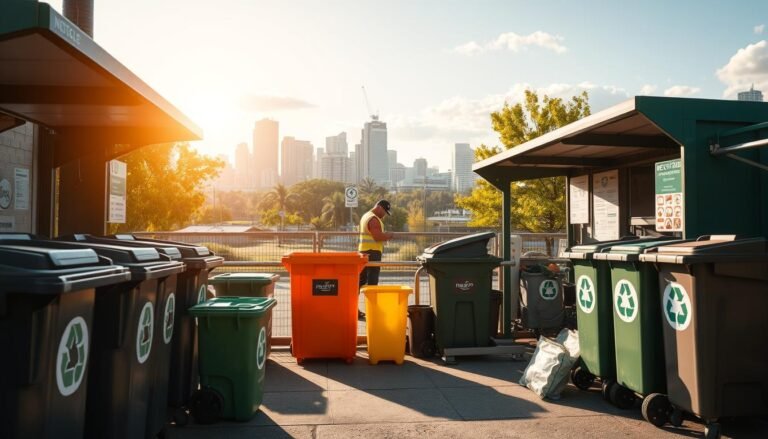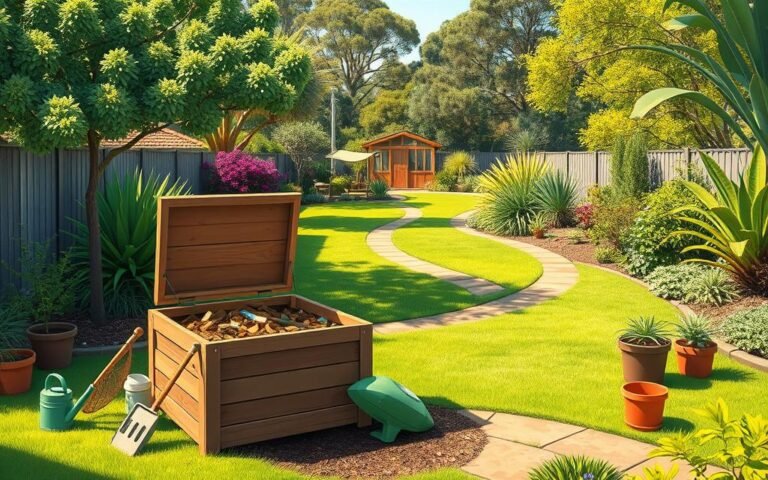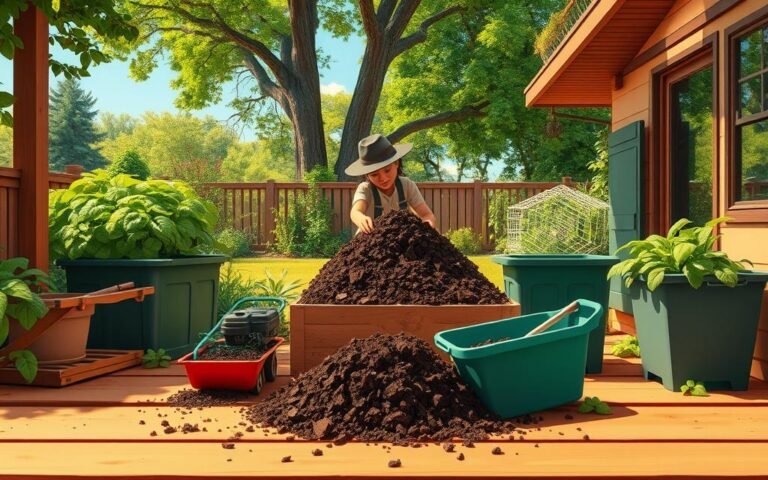
If you garden in Australia, you know composting is great. It turns kitchen scraps and yard waste into soil that’s full of nutrients. This is a simple way to cut down on waste and help the planet.
Using sustainable composting methods makes your garden healthier. Composting breaks down organic stuff into a dark, rich soil. Your plants will really like it.
Let’s dive into composting. You’ll learn how to use this eco-friendly practice to make your garden even better.
Key Takeaways
- Reduce waste by composting kitchen scraps and yard waste
- Create nutrient-rich soil for healthier plants
- Promote sustainable gardening practices
- Improve your garden’s overall health and productivity
- Contribute to a healthier environment
Understanding Composting Basics in the Australian Climate
Composting in Australia needs a special approach because of the country’s changing seasons and different areas. To make good compost, knowing the basics of composting in Australia’s climate is key.
How Seasonal Changes Affect Your Compost Across Australia
Australia’s climate varies a lot, affecting your compost. In summer, compost dries out fast and needs more water. Winter makes compost break down slower, so you might need to change the mix of materials.
To handle these changes, here are some tips:
- Keep an eye on your compost’s moisture, especially when it’s dry.
- Use more brown materials like dried leaves or straw in hot weather to keep it moist.
- In cold weather, add more green materials like kitchen scraps or grass clippings to speed up decomposition.
Ideal Compost Locations for Different Australian Regions
The best place for your compost bin changes with the region. It should be well-ventilated, easy to get to, and a bit shaded.
| Region | Ideal Compost Location |
|---|---|
| Tropical North | Partially shaded area to avoid excessive heat |
| Mediterranean South | Sunny spot with good ventilation |
| Arid Centre | Shaded area to protect from extreme temperatures |
Essential Tools for Sustainable Aussie Composters
To keep composting healthy, you’ll need some important tools. These include:
- A compost bin or tumbler
- A pitchfork for turning the compost
- A compost aerator for improving oxygen flow
- A moisture meter to check moisture levels
“The key to successful composting is maintaining a balance between green and brown materials, ensuring adequate moisture, and providing sufficient aeration.” –
By knowing these composting basics and adjusting to Australia’s climate, you can make nutrient-rich compost. This will help your garden and the environment.
Eco-Friendly Compost Tips for Sustainable Gardens
Starting an eco-friendly garden in Australia means smart composting. It cuts down waste and feeds your plants 🌱. The right methods make your garden a thriving place for local wildlife.
Using Indigenous and Local Materials
Choosing local materials for compost helps native plants and cuts down waste 🌿. Add:
- Native plant cuttings
- Leaves from local trees
- Bark from native species
This method cuts down on outside help and makes compost for your local plants.
Water Conservation Techniques for Drought-Prone Areas
In dry areas, saving water is key for compost health 💧. Here’s how:
- Check moisture often
- Add dry stuff like straw or sawdust to soak up water
- Use a compost cover to stop water loss
These steps help save water and keep compost healthy, even when it’s dry.
Reducing Landfill Waste Through Smart Composting
Smart composting cuts landfill waste and makes garden gold 📦. Compost:
- Kitchen scraps like fruit and veg peels
- Garden waste like grass clippings and leaves
- Cardboard and paper
This way less waste goes to landfills and you get rich compost for your garden.
What to Compost: Australian Kitchen and Garden Waste Guide
As an Aussie gardener, you might wonder what kitchen scraps and garden waste are good for composting. Composting is great for reducing waste, making soil rich for your garden, and helping the environment. Let’s explore what you can compost.
Kitchen Scraps Perfect for Your Compost Bin
Your kitchen is full of things you can compost. Peels from fruits and veggies, tea bags, coffee grounds, and eggshells are all great. They add nutrients and help make good compost.
- Fruit and vegetable scraps
- Tea bags and coffee grounds
- Eggshells
- Bread and grains
Don’t put meat, dairy, or oily foods in your compost. They can attract pests and smell bad. Stick to plant-based scraps for a healthy compost.
“Composting is a simple yet powerful way to reduce waste and create a more sustainable garden. By composting kitchen scraps and garden waste, you’re not only reducing your environmental footprint but also enriching your soil.”
Native Plant Cuttings and Garden Waste Considerations
Garden waste is also good for compost. Cuttings from native plants, leaves, and grass clippings can all be composted. But, you need to mix “green” materials like grass clippings with “brown” materials like dried leaves.
| Green Materials | Brown Materials |
|---|---|
| Grass clippings | Dried leaves |
| Native plant cuttings | Straw |
| Fresh flowers | Shredded newspaper |
Surprising Household Items You Can Compost
Some household items might surprise you by being compostable. Hair, fur, and even vacuum cleaner dust can go in your compost. They add nitrogen and speed up composting.
- Hair and fur
- Vacuum cleaner dust
- Shredded paper and cardboard
Adding these items to your compost reduces waste and makes it more diverse and nutrient-rich.
Remember, the key to good composting is balance and variety. Mix kitchen scraps, garden waste, and household items for a compost that’s good for your garden and the environment.
Troubleshooting Common Compost Problems in Australia
As an Aussie gardener, you might face composting challenges. But don’t worry, we’ve got you covered! Composting is a journey. With a few simple tweaks, you can overcome common issues and achieve a nutrient-rich soil amendment for your garden.
Managing Compost During Extreme Heat and Bushfire Seasons
Australia’s climate can be harsh, especially during extreme heatwaves and bushfire seasons. To keep your compost pile healthy, it’s essential to maintain the right balance of moisture and carbon-rich materials.
During hot spells, your compost may dry out quickly. To combat this, ensure you:
- Keep your compost pile covered to retain moisture
- Add more brown materials like straw or shredded newspaper to absorb excess heat
- Monitor the moisture level regularly, aiming for a consistency like a damp sponge
For areas prone to bushfires, it’s crucial to have a bushfire plan in place, including protecting your compost pile. Consider:
- Locating your compost bin in a safe area away from flammable materials
- Keeping your compost pile moist to reduce fire risk
- Having a fire extinguisher or water source nearby
Dealing with Australian Pests and Wildlife in Your Compost
Australia’s unique wildlife can sometimes be attracted to your compost pile. To deter pests and animals, try these eco-friendly tips:
- Use a secure, animal-proof compost bin to prevent access
- Avoid adding meat, dairy, or oily foods that can attract pests
- Bury food scraps under a layer of brown materials to reduce odors
If you notice pests in your compost, don’t panic! Here’s a simple table to help you identify and manage common compost pests:
| Pest | Solution |
|---|---|
| Ants | Increase moisture, add more green materials |
| Flies | Bury food scraps, add more brown materials |
| Cockroaches | Remove food debris, ensure adequate carbon-rich materials |
Solutions for Slow-Decomposing or Smelly Compost
If your compost is decomposing slowly or emitting unpleasant odors, there are several steps you can take to rectify the issue. First, check the carbon-to-nitrogen ratio and adjust as necessary. Adding more green materials can help speed up decomposition.
For smelly compost, ensure you’re:
- Aerating the pile regularly to introduce oxygen
- Balancing green and brown materials
- Avoiding the addition of smelly items like meat or dairy
By following these troubleshooting tips, you’ll be well on your way to creating a healthy, efficient composting system that benefits your Australian garden.
Using Your Compost in Australian Gardens
Now that you’ve got your compost ready, it’s time to use it in your Australian garden. Compost makes your soil better, leading to healthier plants. It also makes gardening more sustainable.
Best Practices for Native Plant Gardens
Native plants are perfect for Aussie gardens because they fit the local climate and soil. When using compost for native plants, remember:
- Choose compost rich in organic matter to match the soil native plants prefer.
- Don’t over-fertilize, as native plants thrive in poorer soils.
- Blend the compost well into the soil to boost its health and fertility.
Vegetable Garden Applications for Maximum Yield
Compost is a big help for vegetable gardens, giving plants the nutrients they need. Here’s how to use it:
- Blend a lot of compost into the soil before planting vegetables.
- Use compost as mulch to keep moisture in and weeds out.
- Make compost tea by soaking compost in water. It’s a great liquid fertilizer.
For more composting tips, check out the South Australian Government’s guide to composting.
Creating Drought-Resistant Soils with Compost
Compost helps your soil hold water better, making it more drought-resistant. To do this:
- Make sure your compost is well-rotted and full of humus.
- Mix the compost deeply into the soil to improve its structure.
- Apply a layer of compost as mulch to reduce water loss.
By following these tips, you can use your compost wisely. Enjoy a healthier, more sustainable garden.
Conclusion: Growing a Greener Australia Through Composting
As an Australian gardener, you now know how to make your gardening greener. Composting is more than a task. It’s a choice that helps the planet and makes your garden better 🌿.
Using the composting tips from this article, you can help the environment. Your garden will also get healthier. This is true for any garden, big or small.
Starting your composting journey is a big step. You’re part of a group of gardeners who care about the planet. So, start composting and watch your garden grow. You’ll be helping the environment too 🌱.