Traditional gardening can create a lot of waste. This includes chemical fertilizers and yard trimmings. If you’re into eco-friendly gardening, you want to use sustainable gardening practices.
By choosing zero-waste plant practices, you can help the environment. You can use native plants, compost yard waste, and cut down on chemicals. We’ll look at easy ways to make your gardening greener.
Key Takeaways
- Adopting zero-waste gardening reduces environmental impact.
- Using native plants and composting yard waste are key strategies.
- Eco-friendly gardening practices promote a healthier garden ecosystem.
- Sustainable gardening practices can be simple and effective.
- Reducing chemical use is crucial for a more sustainable garden.
The Principles of Zero-Waste Gardening in Australia
Zero-waste gardening can make your Australian garden better. It’s about using less waste and more resources. This makes your garden a healthy place.
Environmental Challenges Unique to Australian Gardens
Australian gardens have special problems like drought and bushfires. Knowing these challenges helps you garden better. Using plants that don’t need much water helps save water and supports local animals.
The Benefits of Sustainable Gardening Practices
Sustainable gardening is good for the planet and your garden. Composting and reusing materials makes your soil better. It helps your garden stay healthy and looks great.
Setting Achievable Eco-Friendly Garden Goals
Start small with your zero-waste gardening. Begin by using less water or making a compost bin. Then, you can do more like using rainwater or recycling garden waste. Every little bit helps.
By following zero-waste gardening, your garden will be better for you and the planet.
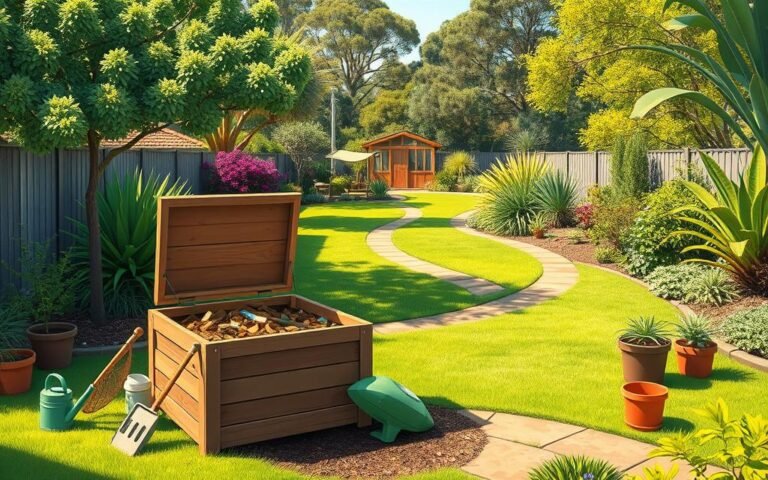
Building a Closed-Loop Composting System
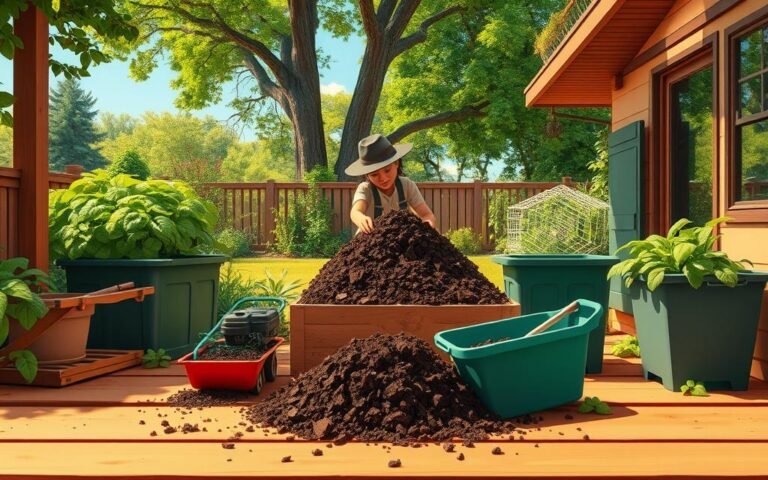
Creating a closed-loop composting system is key in zero-waste gardening. It turns waste into something valuable. This method cuts down on waste and makes your soil better, helping plants grow strong.
Composting Methods Suited to Australian Climates
Australia’s weather is different everywhere. Gardeners can pick from many composting ways. Hot composting and worm farming are two good ones.
Hot Composting for Rapid Breakdown
Hot composting works fast. It needs the right mix of ‘green’ and ‘brown’ stuff. This keeps it oxygen-rich and moist. You can get compost in weeks.
Worm Farming for Kitchen Scraps
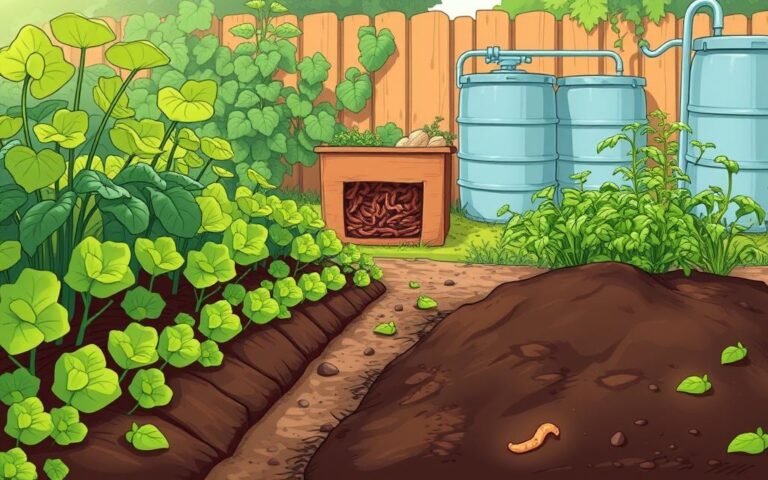
Worm farming is great for kitchen waste. It uses worms to make compost from organic stuff. It’s good for small gardens or indoor spots.
What to Compost and What to Avoid
Not everything can be composted. Include fruit and veg scraps, tea bags, and coffee grounds. Avoid meat, dairy, and oily foods. They attract pests.
Applying Finished Compost to Maximise Benefits
When your compost is ready, use it in your garden. Mix it into the soil for better structure and fertility. Or, use it as mulch to keep moisture in and weeds out.
Using a closed-loop composting system cuts down waste. It also makes your garden healthier and more sustainable.
Water-Wise Gardening Techniques
If you garden in Australia, saving water is key. The country’s weather changes a lot. So, using water-wise gardening is crucial for our planet.
Rainwater Harvesting Systems for Drought Resilience
One smart way is to use rainwater harvesting systems. These catch and save rainwater for later. This cuts down on using tap water and helps during dry times.
You can put a rainwater tank under your roof. It collects rainwater for your plants.
Safe Greywater Usage in the Garden
Greywater is water from sinks, showers, and washing machines. It’s gentle and can help your garden grow. But, make sure to use it safely to keep everyone healthy.
Mulching Strategies to Conserve Moisture
Mulching is a great way to keep your garden moist. It stops water from evaporating and keeps the soil cool.
Organic Mulch Options
- Wood chips
- Straw
- Garden waste
Application Techniques for Maximum Efficiency
To get the most from mulching, use 5-10 cm around your plants. Don’t put it too close to the stems to stop rot. Add more when it’s needed.
Using these water-saving tips makes your garden better. It saves water and helps the planet.
Implementing Zero-Waste Plant Practices in Your Garden
Adopting zero-waste plant practices makes your garden more sustainable. It’s about choosing the right plants and how you grow them. You also plan your garden to cut down on waste.
Selecting Native and Climate-Appropriate Plants
Choosing plants that fit your area is key. These plants need less water and care. For example, Grevillea and Eucalyptus are great for Australian gardens.
Learn more about zero-waste gardening on Homes and Gardens.
Seed Saving and Plant Propagation Methods
Seed saving and plant propagation are vital. They cut down on the need for new seeds or plants.
Collecting and Storing Seeds
Save seeds from your plants to grow new ones. Keep them in a cool, dry spot. Some seeds, like tomatoes, are easy to save.
Cutting and Division Techniques
Many plants can be grown from cuttings or division. For example, rosemary and lavender grow well from cuttings. This way, you get more plants and reduce waste.
Garden Planning to Minimise Waste
Good garden planning is crucial. It helps use space well and choose plants that work together. This way, you avoid wasting resources.
Some strategies include:
- Rotating crops to keep soil healthy
- Using companion planting to fight pests
- Planning for succession planting for ongoing harvests
By using these practices, your garden will be better for the environment. It will also be more resilient and full of life.
Natural Pest Management Solutions
As you tend to your garden, you’ll find natural pest management is crucial. Eco-friendly methods help protect your plants without harming the environment.
Companion Planting Combinations for Australian Gardens
Companion planting is smart for keeping pests away. For instance, marigolds near tomatoes can fight nematodes. Basil and mint improve plant health and taste while keeping insects away.
A gardening expert says, “Companion planting is like creating a community in your garden where each plant supports the others.”
“The right combination of plants can reduce pest problems and enhance biodiversity.”
Attracting Beneficial Insects and Wildlife
It’s important to attract beneficial insects like bees and butterflies. Plant native flowers for nectar and pollen.
DIY Organic Pest Deterrents
Making your own organic pest deterrents is fun and effective. Here are a few ideas:
Homemade Sprays and Solutions
- Garlic spray: Blend garlic with water and spray around plants to deter aphids.
- Soap solution: Mix mild dish soap with water to create a solution that can be sprayed on plants to control pests.
Physical Barriers and Traps
- Use fine mesh to cover plants and prevent pests from reaching them.
- Create traps using sticky tape or jars baited with fruit to capture pests.
Using these natural pest management solutions keeps your garden healthy and in harmony with nature.
Creative Upcycling for Garden Projects
Make your garden green by using old items. Upcycling is fun and helps the planet. It also makes your garden special.
Repurposing Household Items for Garden Use
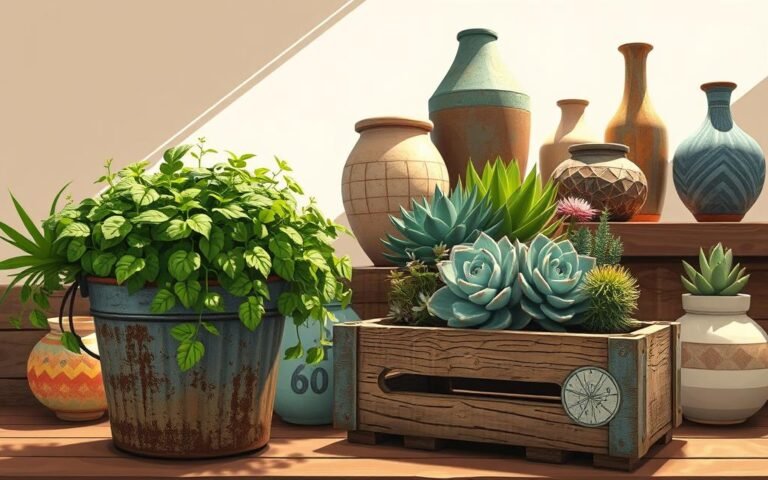
Look around your home for things to upcycle. Old bottles can water plants. Wooden crates are great for plants or storage.
For more ideas, check out Sustainability Tribe. They show how to make cool planters from trash.
Building Garden Structures from Reclaimed Materials
Use old wood, bricks, or stones for your garden. You can make beds, paths, or benches.
Extending the Life of Garden Tools and Equipment
Keep your tools in good shape. Clean and sharpen them often. This makes them last longer.
Maintenance Practices
- Regularly clean your tools to prevent rust.
- Sharpen cutting tools for better performance.
- Store tools in a dry place to prolong their life.
Repair Techniques
Learn to fix your tools. This can fix broken handles or rust. It makes your tools last longer.
| Tool | Maintenance Tip | Repair Technique |
|---|---|---|
| Garden Fork | Clean after use | Replace handle if broken |
| Pruning Shears | Sharpen blades regularly | Oil moving parts |
| Rake | Store in a dry place | Fix or replace broken tines |
Upcycling makes your garden special and green. It shows off your style.
Conclusion: Cultivating a Sustainable Garden Legacy
Creating a zero-waste garden is more than just using eco-friendly gardening practices. It’s about leaving a lasting legacy for future generations. By following the strategies in this article, you’re making big steps towards a sustainable garden legacy.
Zero-waste gardening means many things. It includes building closed-loop composting systems and using natural pest control. These actions not only cut down on waste but also make your garden a thriving place for all.
By adopting these practices, you help the environment and inspire others. So, start your sustainable garden journey today 🌱.
Remember, every small change you make matters. Together, we can make a big difference 🌟.