When it gets hot, keeping your home cool can be tough. But, you might not know that indoor plants can help a lot.
Adding indoor greenery to your home is easy and good for the planet. It makes your place look better and keeps it cooler. So, you can enjoy a more comfy home.
Key Takeaways
- Indoor plants can help reduce the need for air conditioning.
- Certain plants are more effective at cooling than others.
- Incorporating indoor greenery can enhance your home’s aesthetic appeal.
- A cooler home environment can improve your overall well-being.
- Using indoor plants is an eco-friendly way to keep your home cool.
The Science Behind Plants as Natural Cooling Systems
Plants can cool your home naturally. They do this by releasing moisture into the air. This makes your space feel cooler and more comfy.
How Plants Regulate Temperature Through Transpiration
Plants cool the air by releasing water vapor. This process cools the plant and the air around it. It makes you feel cooler, even if the temperature doesn’t drop.
Key aspects of transpiration include:
- Releasing water vapor into the air
- Cooling the plant and its surroundings
- Increasing humidity to create a cooling effect
Research on Indoor Plants and Temperature Reduction
Studies show indoor plants can cool rooms. By placing them right, you can make your home cooler. Some plants are better at cooling than others.
Some key findings include:
- Indoor plants can lower room temperatures by up to 2-3 degrees Celsius
- Certain plants are more effective at cooling than others
- Plant density and placement are crucial for maximum cooling effect
Energy Savings Potential in Australian Summer Conditions
In the Australian summer, air conditioning uses a lot of energy. Using plants to cool your home can save energy. The right plants, placed well, can help a lot.
Potential benefits include:
- Reduced energy consumption
- Lower electricity bills
- A more sustainable cooling solution
Best Energy Efficient Indoor Greenery for Australian Homes
Choosing the right indoor plants can cool your home and make it fresher. The right plants help control your home’s temperature. This means you might not need to use air conditioning as much.
Large-Leafed Plants for Maximum Cooling Effect
Large-leafed plants are great at cooling your home. Their big leaves help them breathe out water vapor. This cools the air around them.
Peace Lilies and Rubber Plants
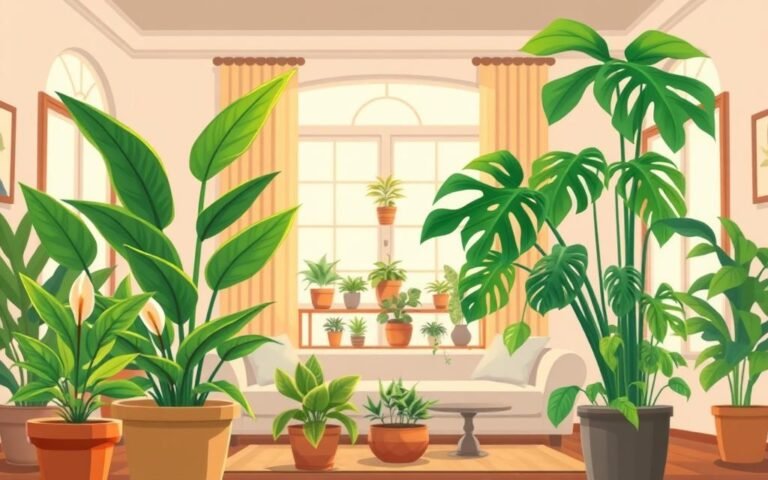
Peace Lilies and Rubber Plants are top picks. Peace Lilies have pretty white flowers and clean the air. Rubber Plants have big, green leaves that help cool the air.
Monstera and Philodendrons
Monstera and Philodendrons are also good choices. They have big leaves that cool your home and look nice too.
Drought-Tolerant Options for Low Maintenance
If you forget to water plants or like easy care, choose drought-tolerant plants. These plants need little water and are perfect for busy people.
Succulents and Cacti Varieties
Succulents and Cacti are great for easy care. They store water in their leaves and stems. This lets them survive with little water and still cool your home.
Snake Plants and ZZ Plants
Snake Plants and ZZ Plants are also good for those who forget to water. They are hardy and clean the air. They do well in low light and need little care.
Native Australian Plants That Thrive Indoors
Native Australian plants are perfect for indoor greenery. They need less care and do well inside.
Lilly Pillies and Native Ferns
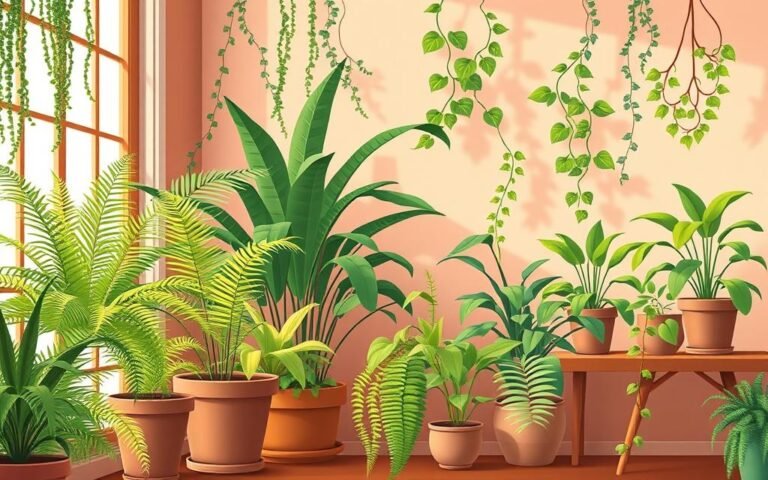
Lilly Pillies and Native Ferns are beautiful choices. They like bright places and make your home feel green and lush.
Kangaroo Paw and Wax Flowers
Kangaroo Paw and Wax Flowers add color and life to your home. They are easy to care for and do well indoors.
Strategic Placement for Optimal Cooling Benefits
To get the most from your indoor plants, place them wisely in your home. The right spot can cool your space, clean the air, and make your home more comfy.
Window-Adjacent Positioning to Block Heat
Placing plants near windows is smart. It blocks sunlight and keeps your home cooler. This is especially true when the sun is strongest.
North and West-Facing Windows in Australian Homes
In Australia, north and west windows get lots of sun. Put big plants or dense greenery there to cool your home more.
Using Hanging Plants as Natural Sunscreens
Hanging plants act like natural sunscreens. They filter sunlight before it gets inside. This works well for windows that get a lot of sun.
Creating Plant Clusters for Humidity Zones
Grouping plants together makes humidity zones. This makes your home feel cooler. Plants together raise the humidity around them.
Bathroom and Kitchen Placement Strategies
Bathrooms and kitchens are already humid. Plants there can thrive and cool your home more.
Living Walls and Vertical Gardens
Living walls or vertical gardens cool your space. They also add beauty to your walls.
Room-by-Room Placement Guide for Australian Homes
Different rooms need different plants. Here’s a guide to help you place plants well.
Bedrooms and Living Areas
In bedrooms and living areas, pick plants that cool and relax you. Choose easy-to-care-for plants that do well indoors.
Home Offices and Sunrooms
Home offices and sunrooms need plants that are easy to care for. These places get lots of light, perfect for many plants.
| Room Type | Recommended Plants | Benefits |
|---|---|---|
| Bedrooms | Snake Plants, Peace Lilies | Promote relaxation, purify air |
| Living Areas | Ficus, Dracaena | Aesthetic appeal, improve air quality |
| Home Offices | Succulents, Spider Plants | Low maintenance, reduce stress |
Complementary Strategies to Enhance Your Indoor Greenery’s Cooling Power
To get the most from your indoor plants, use complementary strategies with them. Mixing plants with other cooling methods boosts your home’s energy efficiency.
Combining Plants with Passive Cooling Techniques
Boost your plants’ cooling power by adding other cooling methods. Use natural ventilation systems to move cool air and cut down on AC use.
Natural Ventilation Systems
Open windows or install vents for natural air flow. This helps your plants cool the air better. A study in City Territory Architecture shows natural air can lessen AC needs.
Water Features and Plant Pairings
Adding water features like fountains or aquariums near plants cools the air. This combo also makes your home feel calmer.
Maintenance Tips to Maximize Cooling Efficiency
Keep your plants cool by maintaining them well. Adjust your watering schedules for the Australian climate you’re in.
Watering Schedules for Australian Climate Zones
| Climate Zone | Watering Frequency | Best Time to Water |
|---|---|---|
| Tropical North | Daily during summer | Early morning or late evening |
| Temperate South | Every other day in summer | Morning |
| Arid Centre | Weekly | Early morning |
Seasonal Care Adjustments
Change your plant care with the seasons. Water less in winter and protect from cold. This keeps your plants healthy and cooling.
Conclusion: Creating Your Cool Green Sanctuary
Adding indoor plants to your Australian home makes it cooler and healthier. It also cuts down on energy use. This article has given you tips and plant suggestions to start your cool green sanctuary.
Some plants, like big-leafed and dry-tolerant ones, help cool your home. Place them near windows or in groups to get the most benefit.
Using indoor plants with passive cooling methods makes your home even more energy-efficient. With a bit of creativity and upkeep, you can have a cool, green space. It will make your home refreshing and good for your health.
Begin making your cool green sanctuary now. Enjoy the cool, green benefits of indoor plants for a better tomorrow.