Making a green home stylish and eco-friendly is simple. Use natural elements and eco-friendly decor to make your home look great. This also helps the planet.
Start by adding plants and choosing materials that are good for the earth. This brings organic beauty to your home. It also makes your indoor air cleaner.
Key Takeaways
- Use sustainable materials for your home decor
- Incorporate plants to enhance indoor air quality
- Opt for eco-friendly decor options
- Create a calming atmosphere with biophilic design
- Reduce your environmental footprint with green home decor
The Transformative Power of Indoor Greenery
Indoor greenery is changing Australian homes into green havens. Adding plants to your home does more than make it look good. It also makes you feel better.
Mental Health Benefits in Australian Urban Living
Studies show that indoor plants can lower stress and lift your mood. In busy cities, plants offer a calming effect. They can reduce anxiety and improve mental health.
Improving Air Quality and Reducing Carbon Footprint
Indoor plants clean the air by removing toxins. By picking the right plants, you can reduce your carbon footprint. Some plants are better at cleaning the air than others.
Creating Biophilic Design in Contemporary Spaces
Biophilic design brings nature into your home. Using indoor plants, you can make your space biophilic. This makes your home feel more welcoming and eco-friendly.
Choosing Plants That Thrive in Australian Homes
Creating a lush indoor garden in Australia starts with knowing the local climate. It’s important to pick plants that fit well with it. Australia’s climate varies a lot, from tropical in the north to temperate in the south. Choosing the right plants is key.
Climate-Appropriate Species for Different Regions
Australia’s climate zones are different. This means each region needs its own set of plants. Knowing your local climate helps pick the best plants.
Coastal Home Plant Selection
Coastal homes need plants that handle salt spray and strong winds. Good choices are Coastal Rosemary and Sea Lavender.
Inland and Dry Climate Options
In dry inland areas, plants that don’t need much water are best. Succulents like Aloe Vera and Echeveria are great. They store water in their leaves.
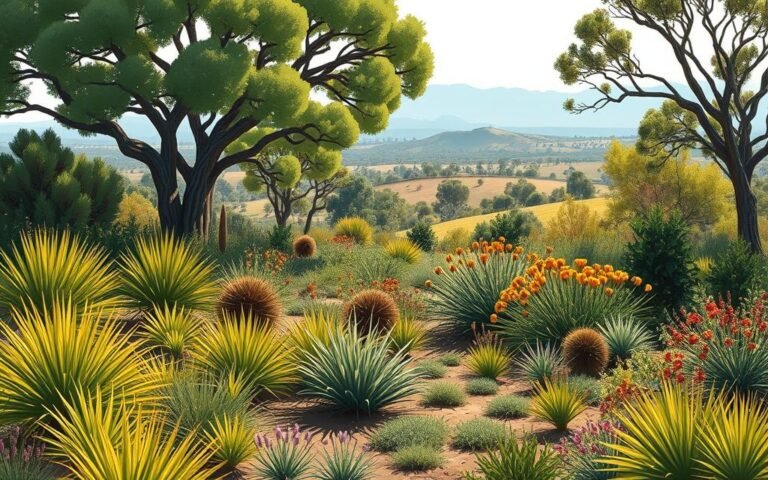
Native Australian Plants for Indoor Beauty
Native Australian plants fit the local climate well. They can also add beauty to your home. Consider Kangaroo Paw and Sturt’s Desert Rose.
| Plant | Climate Suitability | Maintenance Level |
|---|---|---|
| Kangaroo Paw | Dry to temperate | Low |
| Sturt’s Desert Rose | Dry | Low |
| Aloe Vera | Dry to temperate | Low |
Low-Maintenance Varieties for Busy Lifestyles
Busy people might prefer low-maintenance plants. Air plants and ZZ Plant are good. They need little water and care.
Creative Natural Plant-Based Decor Arrangements
You can make your home look amazing with natural plant decor. Think outside the pot to create a lush oasis. It will look great, improve air quality, and make you feel happier.
Vertical Gardens for Space-Saving Solutions
If you have little space, vertical gardens are a great choice. You can use a trellis or a modular planter. This lets you grow plants up, saving space and adding greenery.
- Perfect for small apartments or urban homes
- Can be customized to fit any wall size
- Creates a natural, calming atmosphere
Macramé and Contemporary Hanging Displays
Macramé hangers bring a bohemian vibe to your decor. They show off your plants and add a handmade touch.
For a modern look, try contemporary hanging displays. They’re perfect for simple, clean spaces.
Terrariums and Miniature Ecosystems
Terrariums are great for plants that like humid places. They’re self-sustaining and easy to care for. They’re ideal for those with little time.
Using these creative decor ideas, you can turn your home into a lively, green space. It will show off your style.
Sustainable Materials and Containers
As you make your home greener, think about your planters and containers. Using eco-friendly materials makes your home more sustainable. Look for locally-sourced, upcycled, and natural fibres that match your plants.
Locally-Sourced Eco-Friendly Planters
Choosing planters from local sources cuts down on carbon emissions. It also helps local artists. Terracotta and ceramic planters are great because they’re natural and can break down. Find ones made from recycled materials or that are certified eco-friendly.
Upcycled and Repurposed Container Ideas
Turning old items into planters is creative and cuts down on waste. You can use old boots, wooden crates, or plastic bottles. Make sure they drain well for your plants’ health. Here are some ideas:
- Old colanders as hanging planters
- Wooden pallets turned into vertical gardens
- Plastic bottles as self-watering planters
Natural Fibres and Materials That Complement Plants
Materials like wicker, rattan, and bamboo add warmth and texture. They’re good for your plants and the planet. Using them makes your home feel more organic.
Room-Specific Plant Styling Guide
To make your home a lush oasis, choose the right plants and style them well. Each room has its own special conditions. These can help your plants thrive.
Living Room Statement Plants and Arrangements
The living room is the heart of the home. It’s perfect for statement plants or a collection. Use tall plants like Dracaena or Philodendron for height. Or group smaller plants for a lush look.
For drama, try a vertical garden or a living wall planter.
Kitchen Herb Gardens and Edible Displays
Kitchens are great for herb gardens. They add fresh flavors and greenery. Use wall-mounted planters or pots on countertops to save space.
Popular herbs include basil, rosemary, and thyme. A self-watering planter keeps your herbs healthy.
Humidity-Loving Plants for Bathrooms
Bathrooms are humid, perfect for certain plants. Ferns, orchids, and peace lilies love this. Hang a fern or place a peace lily on a shelf for elegance.
Make sure there’s good lighting, as bathrooms can be dark.
Bedroom Plants for Better Sleep and Air Quality
Bedrooms need plants that improve air and help you relax. Snake plants and lavender are great. They purify the air and have calming scents.
Put a snake plant on a bedside table or lavender on a dresser. It helps you sleep better.
| Room | Recommended Plants | Tips |
|---|---|---|
| Living Room | Dracaena, Philodendron | Use tall plants or group smaller ones |
| Kitchen | Basil, Rosemary, Thyme | Utilize wall-mounted or countertop planters |
| Bathroom | Ferns, Orchids, Peace Lilies | Hang or place on shelves, ensure good lighting |
| Bedroom | Snake Plants, Lavender | Place on bedside tables or dressers |
Practical Plant Care for Australian Conditions
Caring for plants in Australia’s climate needs careful thought. You must understand seasonal changes and manage pests naturally.
Seasonal Maintenance Calendar
A seasonal maintenance calendar is key for Australian gardeners. It prepares you for weather changes all year.
Summer Heat Management
In summer, keep your plants hydrated. Water them in the early morning or late evening to cut down evaporation. For more tips, see our ultimate plant care guide.
Winter Care Techniques
In winter, protect plants from frost with mulch or covers. Water less as plants grow slower.
Pest Control Using Natural Methods
Choosing natural pest control methods is good for the planet. It’s also safer for your family and pets. Try introducing beneficial insects, using neem oil, and companion planting.
Conclusion
You now have the tools to make your living space beautiful and sustainable. Using natural plant-based decor can make your home look great and be healthier.
Choosing green home decor boosts air quality and cuts down on carbon emissions. It also helps you feel closer to nature. Think about how your choices affect your family and the planet.
This article has given you ideas to make your home more sustainable and lovely. You can add a bold vertical garden or a calm terrarium. The choices are endless.
By picking natural plant-based decor and eco-friendly interiors, you’re doing more than decorating. You’re creating a space that cares for you and the environment.