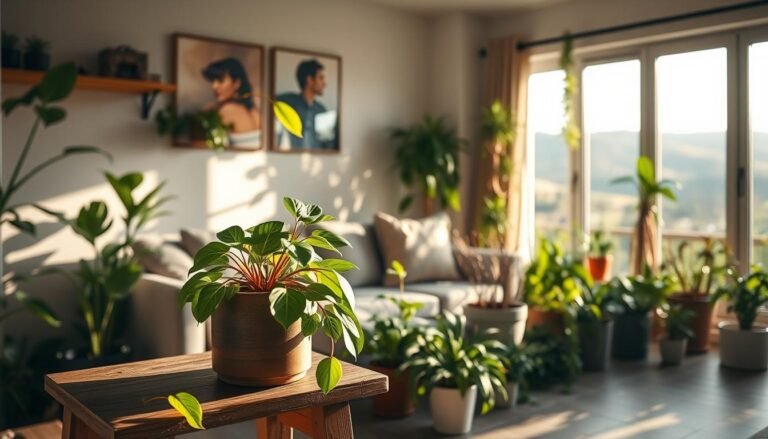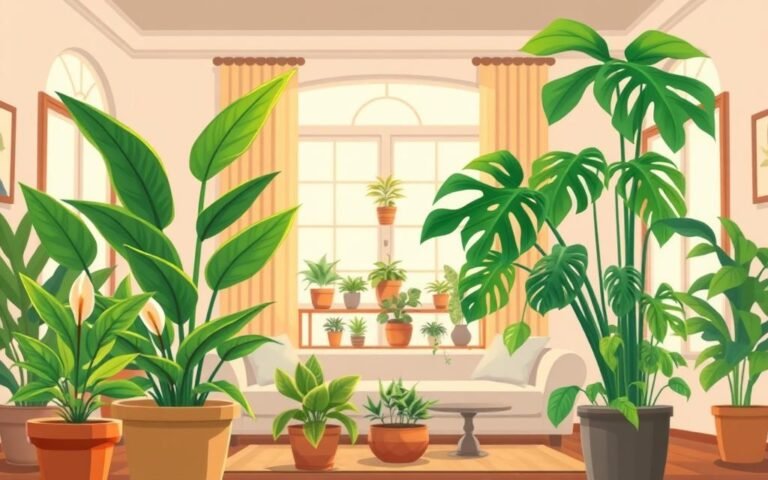
Are you looking for low-maintenance houseplants for your Australian home? You can have indoor greenery without the constant watering hassle.
Drought-resistant indoor plants are great for busy people or new gardeners. They’re not just pretty. They also clean the air and make your home feel calm.
We’ll look at drought-resistant options for your home. You’ll also get tips to keep them healthy with little water.
Key Takeaways
- Discover the benefits of low-maintenance houseplants for your Australian home.
- Learn about various drought-resistant indoor plants suitable for different settings.
- Get care tips to keep your plants thriving with minimal watering.
- Explore options from trusted sources like Cheeky Plant Co. and BHG.
- Create a beautiful and calming indoor space with the right plants.
Why Choose Water-Wise Plants for Australian Homes
Australia’s climate is tough, with droughts and floods. Water-wise plants are a smart choice for indoor gardens. They help save water.
Australia’s Unique Climate Challenges
Many parts of Australia get very little rain. This makes saving water very important. Water-wise plants need little water, perfect for Australian homes.
Water Conservation Benefits
Choosing water-wise plants saves water and helps the planet. You’ll use less water and pay less for it. Plus, it’s good for the environment.
- Reduced water consumption
- Lower water bills
- A positive impact on the environment
Low-Maintenance Advantages
Low-maintenance plants are great for busy people or gardening beginners. They need little care and can handle indoor conditions. They’re also okay if you forget to water them sometimes.
Adding water-wise plants to your home is a wise choice. It’s good for you and the planet.
Understanding Plant Adaptations to Drought
Learning about how plants handle drought can help pick the best ones for your home. Plants have many ways to survive when it’s dry. These include physical, metabolic, and root system changes.
Physical Adaptations for Water Retention
Some plants, like succulents and cacti, can store water. They have thick leaves or stems that hold water. This lets them go without rain for a long time.
Aloe vera is a great example. It stores water in its leaves, making it very good at surviving without rain.
Metabolic Adaptations to Conserve Water
Some plants also change how they work to save water. They might change how they make food or lose water. For example, some plants use a special way to make food at night. This helps them not lose water when it’s hot.
Root Systems and Drought Tolerance
A plant’s roots are key to surviving drought. Deep roots can find water deep in the soil. Plants with lots of roots can grab moisture from a big area.
Buffalo grass is a good example. It has deep roots that let it find groundwater. This makes it very good at handling drought.
| Adaptation Type | Examples | Benefits |
|---|---|---|
| Physical Adaptations | Succulents, Cacti, Aloe Vera | Water storage in leaves or stems |
| Metabolic Adaptations | CAM Plants | Reduced water loss through altered photosynthesis |
| Root System Adaptations | Buffalo Grass, Deep-rooted Plants | Access to deeper water sources |
Best Drought Resistant Indoor Plants for Australian Conditions
Indoor plants that don’t need much water are great for Australian homes. They help save water. You can have greenery indoors without always watering.
Succulents and Cacti Varieties
Succulents and cacti store water well, making them perfect for dry places. They come in many shapes, sizes, and colors. This makes them versatile for decorating your home.
Aloe vera, Echeveria, and Crassula are popular succulents. Prickly Pear and Christmas Cactus are great cacti options too.
Key benefits of succulents and cacti:
- Low water needs
- Many shapes and sizes
- Simple to care for
Snake Plants (Sansevieria trifasciata)
Snake plants have striking leaves and do well in little light. They’re also drought-tolerant. This makes them perfect for those who forget to water.
NASA says snake plants clean the air. They remove toxins like formaldehyde and benzene.
“Snake plants are one of the most low-maintenance plants you can have in your home.”
ZZ Plants (Zamioculcas zamiifolia)
The ZZ plant is easy to care for. It can handle different lights and doesn’t need much water. Its shiny leaves make any room look elegant.
It’s great for beginners or those who want an easy plant.
Jade Plants (Crassula ovata)
Jade plants are succulents that are simple to care for. They can live for a long time. They like well-draining soil and indirect light.
Jade plants are believed to bring good luck. They add beauty and luck to your home.
Adding these plants to your home saves water. Succulents, snake plants, ZZ plants, and jade plants are stylish and easy to care for. They’re perfect for Australian homes.
Native Australian Plants That Thrive Indoors
You can bring a touch of the Australian wilderness into your home with native plants suited for indoor growing. These plants are not only beautiful but also resilient and adapted to Australian conditions.
Wax Flowers (Chamelaucium uncinatum)
Wax flowers are known for their delicate, waxy petals and vibrant colors. They can add a lovely fragrance to your indoor space. To care for wax flowers indoors, ensure they receive plenty of sunlight and maintain a moderate watering schedule.
Kangaroo Paw (Anigozanthos)
Kangaroo paw plants are unique with their claw-like flowers. They attract birds and add an exotic touch to your home. For indoor kangaroo paw, provide bright light and water sparingly, allowing the soil to dry between waterings.
Grevillea Species for Indoor Growing
Grevillea species offer a range of colors and flower shapes, making them a popular choice for indoor gardening. They require well-draining soil and a sunny spot. Prune them regularly to maintain shape and encourage flowering.
Coastal Rosemary (Westringia fruticosa)
Coastal rosemary is a hardy native Australian plant that can thrive indoors with proper care. It prefers well-draining soil and plenty of sunlight. Water it moderately, and prune regularly to keep it bushy and healthy.
Essential Care Guide for Water-Wise Indoor Plants
To keep your water-wise indoor plants healthy, it’s crucial to understand their specific care needs. These plants are adapted to survive with minimal water. But they still need careful attention to thrive indoors.
Proper Watering Techniques
Overwatering is a common mistake when caring for drought-resistant plants. Check the soil moisture by inserting your finger into the soil up to the first knuckle. If it’s dry, it’s time to water. Water thoroughly until you see water draining out of the pot’s bottom holes.
Light Requirements for Australian Homes
Most water-wise plants prefer bright, indirect light. For Australian homes, place them near a sunny window or use grow lights. Be cautious of direct sunlight, which can cause burning, especially during peak hours.
Soil and Potting Considerations
Use a well-draining potting mix to prevent waterlogged soil. A mix designed for cacti and succulents is ideal. Ensure the pot has drainage holes to prevent root rot.
Seasonal Care Adjustments
| Season | Care Adjustment |
|---|---|
| Summer | Increase watering frequency, but avoid overwatering. Provide shade from intense sunlight. |
| Winter | Reduce watering as plants are dormant. Keep them away from cold drafts. |
| Spring/Autumn | Maintain regular watering and fertilization. Prune plants to maintain shape. |
For more detailed information on growing indoor plants, you can visit this resource for additional guidance.
Where to Buy Drought-Tolerant Plants in Australia
Looking for drought-tolerant plants in Australia? You’re in luck. There are many places to find them. Specialist nurseries, online shops, and local markets are all good options.
Specialist Nurseries Across States
Specialist nurseries are great for drought-tolerant plants. They have a wide selection for Australian homes. Some top nurseries include:
- Nurseries that specialize in native Australian plants
- Gardens that focus on succulents and cacti
- Local botanical gardens with plant sales
Online Retailers with Australian Delivery
Shopping online? There are many retailers that deliver drought-tolerant plants across Australia. Check out Flower Power for succulents and cacti.
Local Markets and Plant Swaps
Local markets and plant swaps are perfect for finding unique plants. You can meet other plant lovers and learn about new species.
Styling Your Home with Water-Wise Plants
Make your home a lush oasis with drought-resistant plants. These plants save water and add style to your home. They’re perfect for Australian homes.
Design Ideas for Different Rooms
Drought-tolerant plants can be a stunning focal point in any room. A big succulent or snake plant can make your living room elegant. In the kitchen, a small herb garden with plants like rosemary or thyme is both useful and stylish.
Container and Display Options
The right container can make your plants stand out. Use terracotta, ceramic, or glass pots for a personal touch. Try hanging baskets or tiered stands for interesting displays.
Creating Drought-Resistant Plant Groupings
Grouping plants makes a stunning display and adds depth. Mix plants with different textures and heights for a beautiful arrangement. For example, a tall snake plant with a short succulent and decorative rocks looks great together.
Complementing Australian Home Décor
Drought-resistant plants fit many Australian home styles, from modern to rustic. Pick plants and containers that match your home’s look. This creates a welcoming and stylish space.
Conclusion
Adding drought-resistant plants to your home makes it look better and helps save water. These plants are easy to care for. They’re great for people who don’t have a lot of time or are new to gardening.
There are many drought-resistant plants to pick from. You can choose from succulents, cacti, or native Australian plants like Wax Flowers and Kangaroo Paw. With the right plants and care, you can have a beautiful, water-saving garden.
We hope you start using drought-resistant plants in your home. It’s a smart way to live more sustainably. With the right plants, you can make a beautiful, strong garden that fits well with your Australian home.